












A “dirty” IP is like a compromised ID; it can expose your accounts to high risk or even lead to bans. To avoid this, verifying and optimizing the purity of your proxy IPs becomes a critical step. This guide provides the latest 2026 proxy IP purity testing and optimization solutions to help reduce risk and enhance account stability.
I. What is Proxy Purity? What are the Testing Standards?
Proxy purity refers to whether the IP address is clean, not polluted, and not on a blacklist. Purity is an important factor in determining whether the proxy can function effectively. A high-purity IP significantly lowers the risk of account bans, especially in sensitive fields like e-commerce, social media multi-account management, and data scraping.
Key testing standards include:
- Geolocation Accuracy: Refers to whether the IP’s physical location matches the user’s claimed and business-required geographic area. Platforms validate this using time zone, language preferences, and access speed.
Ideal state: City-level precise matching. Cross-check IP geolocation data, browser time zone, GPS simulated location, and local website access speed to ensure no logical contradictions. - Network Ownership and IP Type: Determines the origin of the IP, which directly affects platform trust. The main categories are residential IPs, mobile IPs, and data center IPs.
Ideal state: Residential IPs are preferred, followed by mobile IPs. Validate the Autonomous System Number (ASN) and Internet Service Provider (ISP) to ensure they are tied to real home or mobile broadband providers. - Blacklist and Reputation: Checks if the IP has been recorded on major platforms, fraud prevention services, or public spam blacklists due to past misuse (such as malicious scraping or fraud clicks).
Ideal state: No bad records. Even if an IP is currently available, it’s risky if it has appeared on blacklists in the past. - Historical Usage Behavior: Analyzes the IP’s usage pattern to determine if it belongs to a shared proxy pool or exhibits high-frequency, abnormal access patterns.
Ideal state: The IP should have a usage pattern similar to regular home users, with “rest periods” and normal access intervals.
II. Why is Proxy Purity Important?
Neglecting purity is one of the main causes of account bans, failed ad campaigns, and blocked data scraping.
- Prevent Account Association and Bans: Platform risk control systems track the IP’s history and suspicious activity. If you use data center IPs or shared proxies that have been abused, it will trigger a risk control alarm, leading to account bans.
- Ensure Business Success and Efficiency: Pure residential IPs ensure smooth operations (logins, posting, ads, data scraping), reducing CAPTCHA prompts, access restrictions, or outright blocks, significantly boosting operational efficiency.
- Protect Data and Privacy: Low-purity shared proxies could be maliciously set up, exposing data leakage or session hijacking risks, threatening account credentials and business data security.
III. How to Test Proxy Purity?
When choosing an IP supplier, many users face the dilemma of selecting high-purity proxies due to inconsistent claims in the market. Here’s how to test for high-purity proxy IPs:
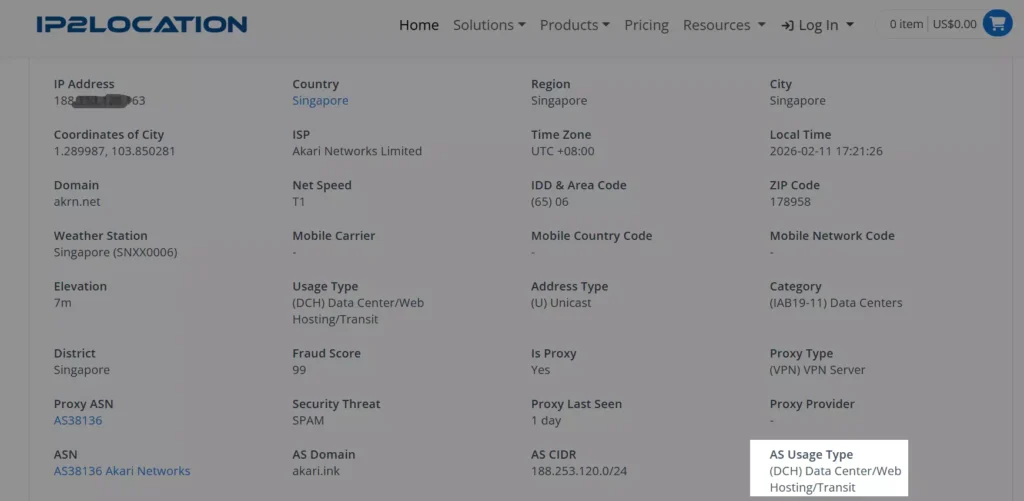
Geolocation: Platforms check if the IP’s location matches the account’s registered or commonly used login location. Frequent or unreasonable location jumps will trigger a risk control alarm. Tools like ip2location and ipinfo can help determine the real location of an IP.

IP Type Testing: Proxy verification tools help check IP attributes, ASN, etc., to confirm the proxy type. For example, ip2location will label residential IPs as “ISP” and server IPs as “Hosting”.
IP Reputation Checking Tools: Historical behavior and reputation analysis are key steps in verifying proxy purity. IPs that have been used too frequently or in malicious activities are at risk of being blacklisted, leading to bans. There’s no objective standard for IP detection tools in the market, but tools like Scamalytics and Ping0 provide numerical references:
| Tool | Risk Level/Score Range | Category |
|---|---|---|
| Scamalytics | Low Risk (0-20 points) | High-quality residential IP with high purity. |
| Ping0 | Risk Control Value | Low (0-25), Medium (26-50), High (51-70), Extremely High (71-100) |
IV. 2026 Latest Optimization Tips: How to Improve Proxy IP Purity?
1.Choose a High-Quality IP Supplier: Selecting a reliable and stable proxy supplier is the first step in ensuring high purity. For instance, IPFoxy’s proxies have high purity, no abuse history, and include features like:

Testing Samples: Before purchasing, request a small batch of IPs for rigorous testing on proxy type and reputation, and test them on your target platform.
2.Avoid Shared IPs: Shared IPs are often polluted due to misuse by others. To ensure purity, use exclusive IPs, reducing the risk of bans caused by others’ activities. It’s recommended for key accounts and ad accounts to use dedicated static residential IPs to ensure exclusive and stable network identity.
3.Regularly Rotate IPs: Even dedicated residential IPs can accumulate behavioral fingerprints when used for high-frequency automated actions. Rotate IPs regularly based on business intensity, setting longer rotation cycles (e.g., 3-6 months) for core accounts and shorter task rotation cycles for data scraping IP pools.
V. FAQ
Basic geolocation checks are fine, but for critical IP type and reputation tests, free tools may provide outdated or inaccurate data. It’s recommended to use professional tools alongside real platform tests.
Dynamic Blacklist: The blacklist is updated in real-time. Even if the IP was clean during detection, it may be blacklisted after others abuse it.
Behavioral Association: Your actions, not the IP itself, may have triggered risk controls, emphasizing the importance of behavior simulation.
Comprehensive Fingerprint: IP is just one factor in risk control. Combine clean browser fingerprints and proper account behavior for a secure system.
For applications requiring high trust, such as e-commerce, social media, and ad campaigns, the answer is yes. Data center IPs are cheaper but can be easily detected and blocked, making them unsuitable for scenarios with high trust requirements.
VI. Summary
Proxy purity is one of the core factors determining account safety. By selecting the right IP supplier, regularly rotating IPs, using dedicated IPs, and combining other techniques, you can effectively maintain the purity of your proxy , preventing bans caused by IP pollution. This guide will help you establish a solid foundation for overcoming platform risk controls and achieving higher operational efficiency and business security in 2026.