












Recently, Google, in collaboration with several security companies, has ramped up efforts to combat residential proxy networks, highlighting the critical importance of proxy resource quality and compliance for business operations. For enterprise users, selecting the right proxy service to build proxy infrastructure, especially static residential ISP proxies, has become a key factor in ensuring success.
This article will provide an in-depth analysis of the technology, classification, and use cases of static residential ISP proxies, along with practical guidance for businesses on how to select the most suitable proxy services.
I. what is Residential ISP Proxies
Static residential ISP proxies play a crucial role in specific internet environments. To help businesses better understand and select the right proxy type, we will classify static residential ISP proxies from multiple dimensions.
1.Native VS Non-native Residential IPs
- Native Residential IP: These IPs are directly assigned by the Internet Service Provider (ISP) to regular home users, typically linked to home broadband connections, offering high concealment and legitimacy. These IPs are legal and trusted, simulating real user behavior to significantly reduce the risk of being detected or banned.
- Non-native Residential IP: These IPs originate from non-local native ISPs but belong to legitimate ISP IP address blocks. While not directly tied to home networks like native residential IPs, they still offer a high degree of concealment and legitimacy, making them suitable for medium-risk environments.
2.Single ISP VS Dual ISP
- Single ISP Proxy: These proxies use IPs from a single ISP. They typically offer high bandwidth, good stability, and cost-effectiveness, making them suitable for large-scale data scraping tasks. Their geographic location is generally limited to the country or region level, making them ideal for scenarios that do not require precise geo-location.
- Dual ISP Proxy: These proxies integrate IP resources from two different ISPs, enabling dynamic IP switching, which enhances anti-blocking capabilities and helps avoid detection of abnormal traffic. They are suitable for more complex anti-scraping scenarios and offer higher stability and flexibility, especially in high-risk business environments.
| Feature | Native Residential IP | Non-native Residential IP | Single ISP Proxy | Dual ISP Proxy |
|---|---|---|---|---|
| Core Principle | Real home broadband network, IP assigned directly by ISP | IP block from real ISP but not directly linked to home networks | IPs from a single ISP | Integrated IP pool from two ISPs, dynamic switching |
| Concealment | Very high, simulates real user behavior | High, but not as strong as native residential IP | Low, may be detected by anti-fraud systems | Very high, prevents single ISP blocking |
| Speed & Stability | Relatively slow, depends on home broadband | Faster, depends on data centers | High, large bandwidth, low latency | High, automatic ISP switching ensures stability |
| Geographic Location | Precise to city level | Precise to region level | Precise to country level | Precise to region level, wide coverage |
| Applicable Scenarios | High concealment tasks like social media management, e-commerce anti-association | Medium-risk data scraping, suitable for moderately complex anti-scraping environments | Large-scale data scraping, SEO queries, etc. | High-frequency, high-volume scraping, high anti-blocking demand tasks |
II. How Should Businesses Choose Static Residential ISP Proxy Services?
1.Choose a Compliant IP Pool
It is important to choose proxy service providers with legitimate authorization, ensuring that the proxy pool is sourced from real ISPs and free from gray-market techniques like SDK bundling. Providers like IPFoxy, with legitimate authorization, use non-invasive technologies to ensure IP sources are transparent and stable, avoiding networks expanded through gray-market methods. Using clean residential IP resources ensures more stable business operations in complex risk environments.

- Compliant IP sources, from local real ISPs and authorized operators
- Real residential IP nodes, high purity, trusted, and harder to trigger platform risk control
- Coverage of over 200 major countries, supporting city-level location
2.How to Test Proxy Service Quality?
To ensure proxy service quality, several tests should be conducted, primarily focusing on IP purity and IP attribute validation. These tests can help determine whether the proxy IP is reliable, abused, or suitable for your business needs.
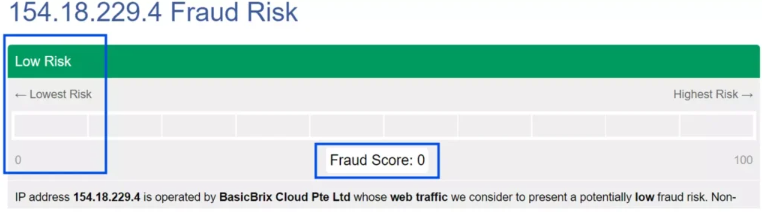
- IP Purity: Purity tests check if the IP is abused or blacklisted. Tools like Ping0 or Scamalytics can help verify the IP’s risk and fraud score, reflecting its purity. For example, IPFoxy’s static residential IP scored 0 on Scamalytics and 5% on Ping0, showing it is clean and reliable, ideal for tasks requiring network stability and privacy protection.
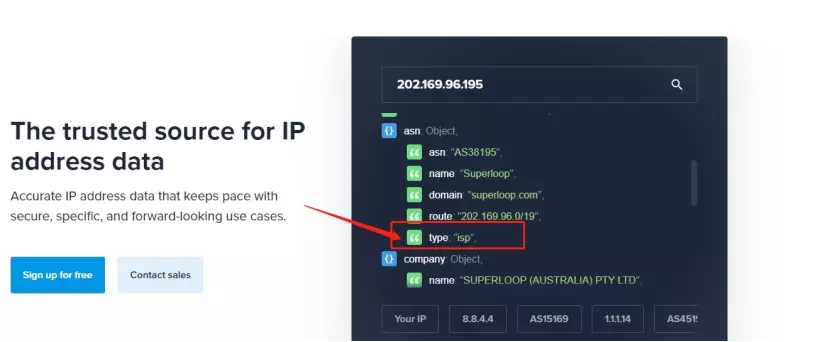
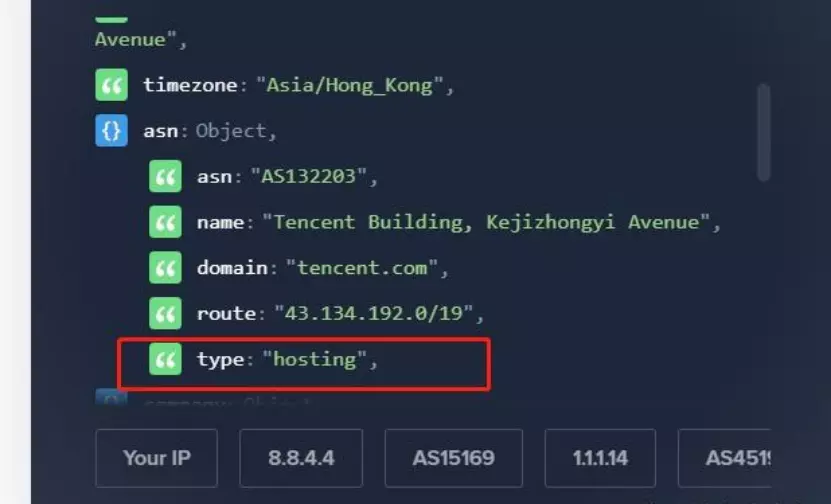
- IP Attribute Test: Tools like ipapi, whoer, and ipinfo can verify the proxy’s IP attributes, ASN, and other details to confirm the proxy type and vendor reliability.
3.Match Proxy Type to Business Scenario
Different business needs require different proxy IPs. By matching the proxy type to specific business scenarios, businesses can significantly increase data scraping efficiency and reduce the risk of blocking.
- Social Media, E-commerce: For platforms with high risk control, native residential ISP proxies are recommended to enhance account security.
- SEO Testing, AI Data Collection: For high-frequency scraping tasks, dynamic residential IP proxies with high authenticity and rotation are preferred.
- Ad Verification and Security Testing: Dual ISP proxies excel in tasks requiring high stability and anti-blocking, suitable for ad ranking monitoring and simulation attacks.
III. Frequently Asked Questions (FAQ)
A1: Residential IPs simulate real user behavior, offering higher concealment and are harder to detect as bot traffic, making them ideal for managing multiple social media accounts and avoiding platform bans.
A2: Yes, ISP proxies provide higher bandwidth and speed, making them suitable for large-scale data scraping tasks, especially in low-risk anti-scraping environments.
A3: Dual ISP proxies are ideal for tasks requiring high anti-blocking, high stability, and broad geographical coverage. Businesses can choose dual ISP proxies based on task complexity, data scraping frequency, and anti-blocking needs.
IV. Conclusion
Proxy services are increasingly important for data collection, account management, and other business scenarios. By selecting the right static residential ISP proxy, ISP proxy, or dual ISP proxy, businesses can perform tasks more efficiently and in compliance with regulations. When choosing a proxy service, businesses should consider factors like concealment, speed, stability, and the legitimacy of proxy sources, along with their specific use case.