












Many people face the same problem after creating a Facebook Page:they post content, but almost nobody sees it;things look normal at first, then reach suddenly drops;some pages are even labeled as “low-quality pages” after only a few days.
In 2026, Facebook no longer fully trusts newly created Pages.Pages have moved from a “create and post freely” stage into a mandatory “warm-up phase.” If this phase is skipped, the page may suffer reach restrictions, or even be flagged as spam.
This article does not focus on how to create a Page.nstead, it explains how a new Page can start from zero and gradually achieve stable exposure.
I. Why Facebook Pages Need a Warm-Up Phase
1、New Pages trigger higher risk controls
From Facebook’s system perspective, new Pages have several inherent risk factors:
no historical activity,
no engagement records,
no user relationship network,
high behavioral plasticity.
To the algorithm, this often means potential marketing accounts, batch-created accounts, or automated operations.
As a result, new Pages start with low initial weight.
If obvious promotional behavior appears too early, risk control systems are easily triggered.
2、Facebook is increasingly sensitive to “environment consistency”
In 2026, Facebook not only checks what you post, but also where you log in from,
whether your device is stable,
whether multiple Pages are operated in the same environment,
and whether behavior patterns are continuous.
If a Page frequently switches countries or proxy environments,
or shows significant device fingerprint changes,
the system may assume large-scale commercial manipulation.
Such behavior is often more likely to be restricted than content violations.
3、Behaviors that easily lead to “spam Page” classification
Pages may be classified as spam, and even affect the associated account.
Common triggers include:
posting ads or external links immediately after creation,
publishing many posts per day,
frequently changing name, category, or description,
highly repetitive content,
no real user interaction.
What appears as “hard work” to operators is often interpreted as batch behavior and excessive promotion intent by the system.
4、Stability of the Facebook account itself
Although a Page is technically separate, it is still tied to a personal account or BM.
If the account is newly registered, lacks normal social activity, or has violation history,
the Page will carry a risk label from the beginning.
It is not recommended to use new accounts to create important Pages.
II. How to Build Natural Traffic for a Facebook Page: Step-by-Step
1、Preparation stage: account identity and environment setup
(1) Environment setup: avoid account association
Operating Facebook Pages should start with environment stability, not content.
Using the same IP, shared IP, or non-exclusive IP can cause risks:
the system may suspect batch operations and trigger restrictions,
if one Page is flagged, others in the same environment may be affected,
data center or shared IPs may cause low initial weight and limited reach.
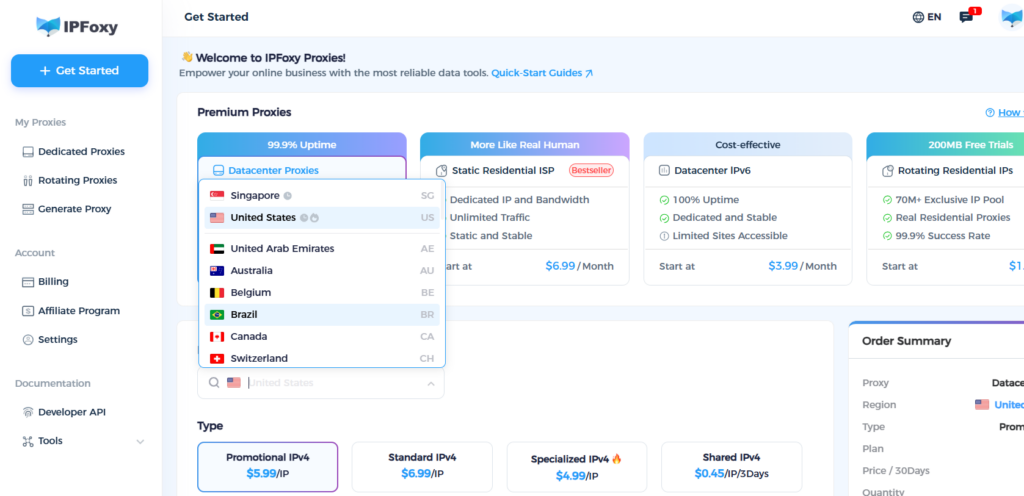
It is recommended to use long-term, stable, dedicated residential proxy environments.
These can be obtained from proxy services such as IPFoxy, using real local IPs aligned with the Page’s positioning.
This helps the system identify normal users and supports the cold-start phase.
(2) Complete basic Page information
After creating the Page, the first task is to make it look like a real brand or organization:
upload profile and cover images,
fill in description,
choose a realistic industry category,
complete the About section.
At this stage:
do not post external links,
do not run ads,
do not promote.
The goal is credibility, not exposure.
2、Initial stage (Days 1–30)
The main goal is to establish normal content and behavior patterns.
(1) Gradual content publishing
Do not post in bursts.
Recommended frequency: once per day or once every two days.
Keep posting time consistent.
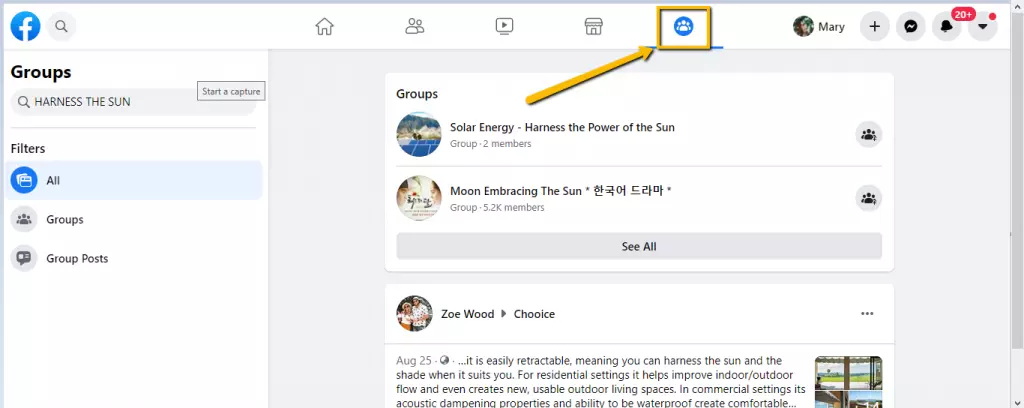
(2) Join relevant groups and participate with value
Join groups related to your industry,
participate in discussions, answer questions, share experience.
Do not promote, do not post links, do not divert traffic.
The purpose is to create real social signals.
(3) Content structure: image + text > pure links
Content should focus on experience sharing, industry observations, and short viewpoints.
Avoid CTAs, purchases, and jump links.
Facebook prefers content that keeps users on the platform.
(4) Behave like a normal user
Besides posting, daily behavior can include:
liking other Pages,
following peers,
occasionally commenting.
Do not only post without interacting.
This proves you are not an automated tool but a real operator.
3、Growth stage (Days 31–90)
Commercial content can be introduced gradually with a recommended ratio of
80% informational content + 20% commercial content.
(1) Add light commercial content
Content can include case studies, product background stories, usage scenarios, or user feedback.
Avoid direct ad-style posts.
(2) Test exposure capability
Test the same topic in 2–3 formats.
Observe engagement rates to determine whether reach is limited.
Consistent organic interaction growth indicates entry into the recommendation pool.
(3) Improve interaction quality
Reply to comments and messages within 12 hours.
Create fixed interaction formats such as weekly Q&A or polls.
Engagement itself is a strong weight signal.
(4) Initial ad testing
Set a small budget of 5–10 USD per day to promote posts with good organic engagement.
Test different audiences.
The goal is not conversion, but learning what content performs best.
4、Stable stage (Days 91–180)
The goal is deep content operation and community building.
(1) Deep content and community building
Create exclusive communities and convert Page followers into community members.
Upgrade relationships from platform-based to user-based.
Add thematic sharing, experience summaries, and regular activities to increase loyalty.
(2) Multi-account coordinated operation
Different Pages can echo each other’s content and interact to expand reach.
Maintain environment isolation and natural behavior.
Avoid multiple Pages using the same IP or device.
(3) Cross-platform integration
Use Facebook as a traffic hub to receive traffic from other platforms,
then guide users to email, communities, or official websites to build long-term private traffic systems.
Keep promotion natural and avoid sudden mass promotion.
III. Common Pitfalls in Facebook Page Warm-Up
1、Buying or inflating followers
Fake followers lack interaction.
The system detects abnormal growth and reduces distribution weight.
2、Multiple account association
Operating multiple Pages on the same IP or device means one issue can affect all.
3、Over-commercialized content
Selling from the beginning, all posts with links, no informational value.
The system directly reduces reach.
4、Frequent Page information changes
Frequent name, category, or description changes are treated as abnormal behavior.
5、Unstable network environments
Frequent country switching or abnormal IP sources cause location jumps and trigger security reviews.
It is recommended to use residential proxy environments as infrastructure
and avoid free or public tool IPs.
V. FAQ
It is recommended to wait at least 2–3 weeks of stable operation before gradually adding external links and controlling the ratio.
At the initial stage, one post per day is recommended, no more than two.
In the stable stage, adjust based on engagement.
Yes, especially for spam content or association violations.
After being banned, environment risk increases, and it is not recommended to create new Pages in the same environment.
V. Conclusion
Facebook Page operation in 2026 is essentially about three things:
credible content, natural behavior, and stable environment.
Instead of asking “why is there no traffic,”
ask “does the system trust my Page?”
For teams managing multiple Pages long-term,
the real challenge is not content creation,
but ensuring every Page runs in a stable, credible, and independent environment.
Only when a Page is recognized as “normal” by the system
can real traffic truly begin.