











As the world’s most widely used online payment platform, PayPal account limitations remain a major concern for sellers and users alike. Whether you are an e-commerce seller, independent website operator, or ordinary user, once your PayPal account gets limited or suspended, the consequences can range from months-long fund freezes to permanent account loss.
This article systematically explains the latest 2026 PayPal account limitation causes, account restriction levels, appeal and recovery methods, and practical prevention strategies to help you minimize the risk of account suspension or efficiently recover after a limitation occurs.
I. Common Reasons for PayPal Account Limitations
Before learning how to prevent PayPal account suspensions, it is important to understand why accounts get flagged in the first place. PayPal’s risk control system covers multiple dimensions:
- IP address issues: Frequently switching nodes, using datacenter IPs, or free IP ranges can trigger risk controls;
- Multi-account association: Using the same device, IP, or bank card for multiple accounts may cause PayPal to detect linked accounts and suspend them in batches;
- Abnormal fund activity: Sudden spikes in transaction volume or received payments that differ significantly from historical behavior;
- High dispute or refund rates: Excessive buyer complaints or chargebacks are common causes of seller account suspensions;
- Selling prohibited or infringing products: Accounts involving counterfeit goods, weapons, or restricted products face stricter monitoring;
- Incomplete identity verification: Newly registered accounts that fail to complete KYC verification promptly are more likely to be restricted.
II. PayPal Account Limitation Levels
PayPal account restrictions are generally divided into four levels. Different levels require different recovery solutions, so it is important to first determine which type of limitation your account falls under.
Level 1: Basic Warning
The account remains fully functional for sending and receiving payments, but a warning notification appears requesting additional documents for verification. This is the mildest risk-control status. It is strongly recommended to respond within 24 hours, otherwise the restriction may escalate.
Level 2: Functional Limitation (Withdrawal/Payment Restricted)
The account can still receive payments, but withdrawals, payments, or refunds are temporarily disabled. At this stage, PayPal usually requires transaction records, shipping details, and related documents. Review times typically range from 3 to 5 business days.
Level 3: Account Access Limited
Users can still log in and view balances or transaction history, but core payment functions are restricted. In this case, users need to enter PayPal’s Resolution Center and submit appeal documents step by step. The process is usually more complex and takes longer to resolve.
Level 4: Permanent Freeze / 180-Day Hold
This is the most severe restriction level. Account funds are frozen for 180 days. During this period, users can only withdraw remaining funds but cannot send or receive payments. After the 180-day period ends, remaining funds are usually withdrawable, but the account itself is effectively permanently banned. Accounts involving prohibited products or repeated serious violations may be directly escalated to this stage.
III. How to Appeal a PayPal Account Limitation (With Email Template)
After checking the suspension reason in PayPal’s official email, you can prepare supporting documents such as identity verification, transaction records, shipping information, bank statements, or payment proof before contacting PayPal support.
There are three common appeal methods:
- Online submission: Upload documents directly through the Resolution Center;
- Phone support: Contact PayPal customer service and request manual review;
- Appeal email: Send an official appeal email explaining the situation.
Reference template:
Dear PayPal Trust and Safety Team,
I am writing to appeal the current limitation placed on my PayPal account ([Account Email]).
I understand that my account has been flagged due to [possible reason, such as unusual transaction activity / unverified identity]. I sincerely apologize for any concern this may have caused, and I am fully committed to cooperating with your review process.
To support my appeal, I have attached the following documents:
- Government-issued ID (front and back)
- Order records and tracking information
- Supplier invoices / purchase records
I kindly request that your team review my account at the earliest convenience. I value my PayPal account and assure you that all my transactions comply with PayPal’s Acceptable Use Policy.
Thank you for your time and assistance.
Sincerely,
[Your Name]
[Account Email]
[Contact Number]
IV. 2026 PayPal Account Suspension Prevention Guide
Preventing account limitations is far more important than appealing after suspension. Below are some of the most practical PayPal prevention strategies in 2026.
1.Maintain a Stable Network Environment
This is one of the most important PayPal account protection practices.
- Always log into the same account using the same IP whenever possible;
- Disable browser WebRTC to prevent real IP leakage;
- Avoid datacenter IPs that may already be flagged as high-risk by PayPal’s risk-control system.
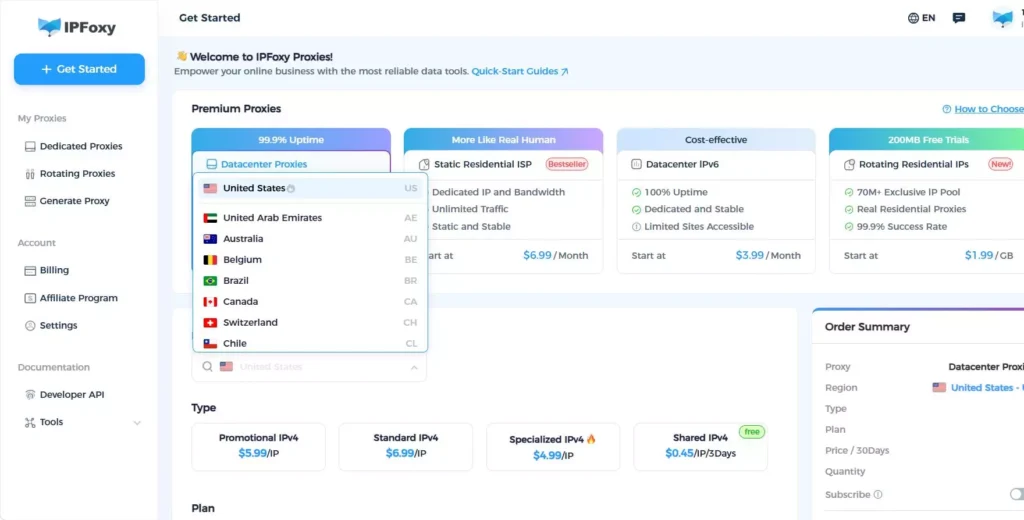
A real and exclusive dedicated static residential proxy can help reduce account limitation risks. For example, many teams choose IPFoxy Proxies dedicated static residential proxy services, which provide native residential IP resources from multiple countries and regions supported by PayPal, helping users create a stable account environment and reduce platform risk detection.
2.Warm Up Newly Registered Accounts
Do not immediately conduct large transactions after registering a new PayPal account.
Recommended practices include:
- Complete KYC verification and bind a real phone number and bank card/credit card after registration;
- Maintain low-frequency and low-value transactions during the first 2 to 4 weeks to gradually build account credibility;
- New accounts commonly experience a 21-day payment hold, which is part of PayPal’s normal mechanism;
- Log into the account regularly to avoid long-term inactivity.
3.Operate Compliantly and Avoid High-Risk Categories
- Carefully review PayPal’s Acceptable Use Policy to ensure products are compliant;
- Mainland China accounts should avoid transactions involving cryptocurrency or gambling;
- Keep dispute and refund rates low, ideally maintaining chargeback rates below 1%;
- Always use trackable shipping methods and upload tracking numbers promptly.
4.Plan Withdrawal Frequency and Amounts Carefully
- Avoid withdrawing all funds immediately after receiving payments, as this may appear suspicious;
- Keep a reasonable balance in the account and withdraw funds gradually;
- Mainland China accounts should pay attention to the annual USD 50,000 withdrawal limit and plan ahead;
- Prepare transaction source documents in advance if account turnover increases significantly.
5.Avoid Multi-Account Associatio
- Avoid linking multiple PayPal accounts to the same device fingerprint, IP, or bank card whenever possible;
- If managing multiple accounts is necessary, use separate devices and isolated network environments. Many users also combine dedicated static residential proxy services from IPFoxy Proxies with an Anti-detect browser such as AdsPower to isolate account environments.
V. FAQ
In most cases, yes. Even if the account is suspended, remaining funds are usually still withdrawable. During the freeze period, users can only withdraw funds and cannot send or receive payments. After the 180-day freeze ends, the remaining balance can generally be transferred back to the linked bank account.
If repeated submissions fail, try providing additional transaction evidence or contact official customer support for manual review. If the account clearly violated platform rules, the success rate of appeals will decrease significantly.
Strongly not recommended. Many datacenter IP ranges have already been flagged by PayPal’s risk-control database, resulting in very low registration success rates and a high likelihood of account suspension. For stable long-term use, dedicated static residential proxy solutions are strongly preferred.
VI. Conclusion
PayPal account limitations are not impossible to prevent, nor are they unsolvable. If your account gets suspended, calmly identify the corresponding limitation level outlined in this guide, prepare the appropriate appeal materials, and actively communicate through official channels. Most Level 1 to Level 3 restrictions still have a chance of recovery.
Long-term account stability ultimately depends on maintaining a compliant operating strategy and implementing reliable PayPal account protection practices.