











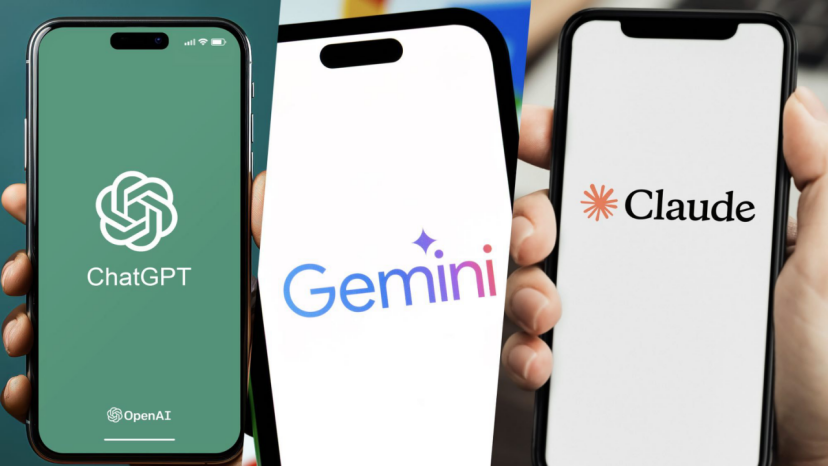
As the AI race continues to intensify, three major players now dominate the landscape: Google’s Gemini, OpenAI’s ChatGPT, and Anthropic’s Claude. Each claims to offer “state-of-the-art” capabilities, but for developers, practical decision factors matter far more than benchmark scores.
Which model best fits your project? How do costs scale? How mature is the ecosystem?
While all three can write code, answer questions, and generate content, the differences in model strengths, usage limits, API experience, stability, and real-world use cases are significant.
This article compares Gemini, ChatGPT, and Claude from a developer’s real usage perspective, helping you choose the most suitable model for different project stages and business needs.
I. Background and Positioning Differences
Before comparing capabilities, understanding each model’s product DNA explains many real-world experience differences.
1、ChatGPT (OpenAI)
Core positioning: General-purpose large language model platform
Strengths: Reasoning, code understanding, multimodality, mature ecosystem
Target users: Developers, product managers, content creators, enterprise teams
ChatGPT functions as an all-purpose AI assistant, prioritizing breadth of capability and overall stability.
2、Claude (Anthropic)
Core positioning: Safety-first design with long-context understanding
Strengths: Long document processing, logical consistency, text refinement
Target users: Developers, researchers, content-heavy teams
Claude emphasizes controllability, reliability, and reduced hallucination.
3、Gemini (Google)
Core positioning: AI tightly integrated with the Google ecosystem
Strengths: Search understanding, multimodal input, Workspace and Android integration
Target users: Google ecosystem users, web and Android developers
Gemini acts as the access layer for Google’s AI capabilities.
II. Core Capability Comparison
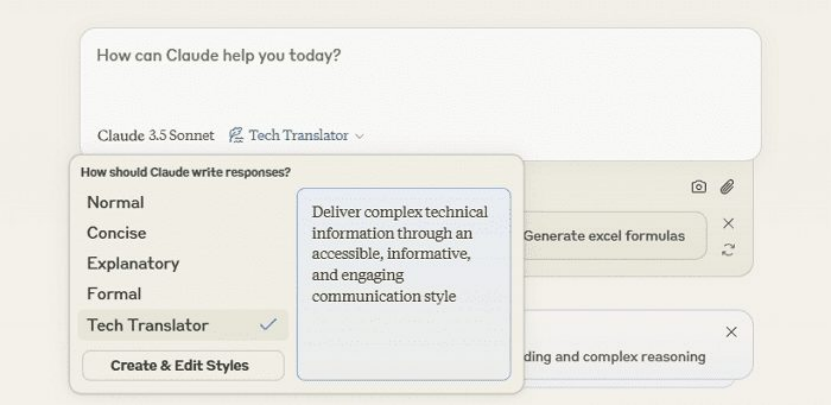
1、Claude 3.5 / 3.7
For many developers, Claude is currently considered the strongest coding-focused model.
- Code quality: Claude excels at complex logic structures, debugging, and refactoring. Its outputs are usually cleaner, more standard-compliant, and concise.
- Artifacts real-time preview: This is a standout feature. Developers can preview generated React components, HTML pages, or charts directly in a side panel, significantly reducing front-end prototyping time.
- Long context support: With up to 200K tokens, Claude can ingest entire project documentation. Long-context comprehension is one of its strongest areas, making it ideal for reading technical documents, analyzing protocols and specifications, and handling documentation-heavy development or review tasks.
2、ChatGPT (GPT-4o / o1)
OpenAI remains the ecosystem leader.
- Reasoning ability: For advanced algorithms and complex mathematical problems, o1’s chain-of-thought reasoning delivers exceptional depth. Writing code, fixing bugs, and explaining complex logic are core strengths, though it may occasionally produce overconfident outputs on uncertain tasks.
- Ecosystem and API: OpenAI provides the most comprehensive API documentation and library support. Integration with Python or Node.js is straightforward and low-friction.
- Multimodality: GPT-4o continues to lead in unified handling of audio, image, and video inputs, with strong response speed and consistency.
3、Gemini (Flash / Pro)
Gemini is gaining momentum through ecosystem-driven advantages.
- Million-token context: Gemini supports up to 1M or even 2M tokens, allowing entire codebases, hours of video, or thousands of pages of PDFs to be processed at once. This is especially valuable for legacy project migration.
- Speed and cost: Gemini offers very low time-to-first-token latency and highly competitive API pricing, making it suitable for high-frequency automation workloads.
- Google Workspace integration: For workflows built on Google Cloud or Firebase, Gemini provides native compatibility.
Below is a structured comparison:
| Dimension | Google Gemini Advanced | OpenAI ChatGPT (GPT-4) | Anthropic Claude (3 Opus) |
|---|---|---|---|
| Core Strengths | Native multimodal capabilities, deep integration with Google ecosystem, strong information recency | Powerful logical reasoning, most mature developer ecosystem & plugin system | Ultra-long context window, top-tier safety/harmlessness, expert document processing |
| Standout Abilities | Image/video understanding, code generation, multilingual support, seamless search integration | Complex instruction following, creative writing, structured output | Summarizing & analyzing long texts, complex logical reasoning, high-compliance scenarios |
| Context Window | ~1M tokens (Gemini 1.5 Pro) | 128K tokens (GPT-4 Turbo) | 200K tokens (standard), some versions support 1M |
| API & Cost | Competitive pricing, integration advantages for Google Cloud users | Higher cost, but mature billing model and rich tooling | Mid-range pricing, significant cost-effectiveness for long-context scenarios |
| Availability & Access | Some advanced features have regional restrictions, relies on Google account system | Widest access, but strict account risk controls, limited in some regions | Relatively fewer regional restrictions, but still has access controls |
| Best Use Cases | Real-time applications integrated with search, multimodal tasks, Google Cloud ecosystem projects | Innovative application development, projects requiring rich plugins or third-party integration | In-depth long document processing, high-risk compliance fields (legal/finance), deep dialogue |
III. Scenario-Based Selection Guide
1、Choose Gemini Advanced if:
Your project relies heavily on the Google ecosystem, such as processing Gmail or Docs data or deploying on Google Cloud.
Native multimodal understanding is a core requirement, including image or video analysis and cross-modal generation.
You require high information freshness through integrated search results.
2、Choose ChatGPT / GPT-4 if:
Developer ecosystem and community support are top priorities, with access to abundant plugins and open-source tools.
You need reliable daily development assistance, including coding, debugging, and rapid prototyping.
Your project emphasizes complex reasoning chains, creative generation, or strict instruction adherence.
You are building consumer-facing applications with strong interactivity.
3、Choose Claude (Opus) if:
You need to process extremely long texts such as academic papers, large codebases, or legal contracts, with deep analysis and Q&A.
Safety and harmlessness are non-negotiable, especially in legal, financial, or healthcare-related compliance scenarios.
You require long, coherent, and highly consistent conversations over extended sessions.
IV. Why Developers Need High-Quality Proxy Infrastructure
When calling AI model APIs or building AI-driven automation workflows such as web scraping combined with LLM analysis, developers often face access restrictions, rate limiting, or proxy bans.
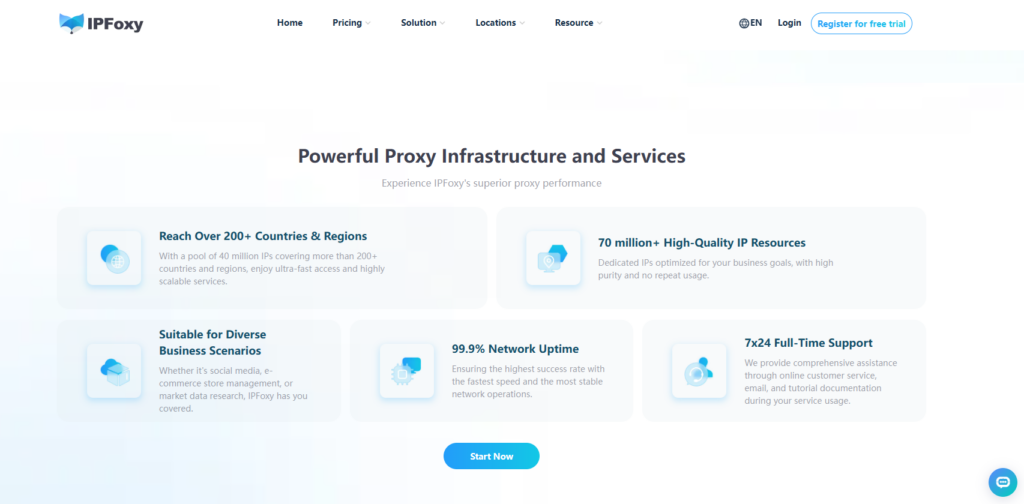
This is where IPFoxy, as a professional proxy service provider, delivers critical support.
- Bypassing access restrictions: Some AI APIs are limited by location or access policies. Using IPFoxy’s dedicated static residential proxy resources allows developers to maintain stable API access across different regions.
- Avoiding scraping blocks: When performing large-scale data collection and real-time analysis, target sites often block frequent requests. IPFoxy’s high-anonymity residential proxy networks simulate real user behavior and reduce the risk of triggering anti-bot systems.
- Multi-account management: For workflows requiring multiple AI service accounts, IPFoxy’s dedicated static proxy solutions allow each account to operate with an independent identity, reducing association and suspension risks.
Choosing the right model is only the first step. Stable, high-performance network infrastructure is essential to ensure AI projects operate reliably and efficiently.
V. Conclusion
As AI model capabilities continue to converge, coordinated optimization between model selection and network infrastructure will become a core competitive advantage for developers and businesses.
A reliable proxy foundation enables AI systems to deploy smoothly at scale and unlock their full potential across diverse application scenarios.