











Have you ever encountered a 403 Forbidden error, repeated CAPTCHA challenges, or continued access issues even after changing your IP while collecting web data?
These issues are often related to the anti-bot and security verification systems websites use. Today, websites assess a combination of signals—including IP addresses, HTTP requests, browser environments, user behavior, and identity information—to identify unusual automated traffic.
What are Cloudflare, Kasada, Persona, PerimeterX, and CAPTCHA, and how do they identify bots? This guide explores the major anti-bot and human verification technologies used in 2026.
I. How Do Websites Detect Bots? Six Common Detection Layers
Websites rarely rely on IP addresses alone to identify visitors. Instead, they evaluate multiple layers, including network signals, requests, devices, behavior, and identity. Common detection layers include:
1. Network-Level Detection
This layer examines the source and reputation of an IP address, along with request frequency. Signals may include IP type, ASN, and historical abuse records, which help identify unusual traffic sources.
2. Protocol and Request-Level Detection
This layer checks whether requests exhibit communication patterns commonly associated with real browsers. Examples include TLS handshake characteristics and the order and consistency of HTTP headers.
3. Device and Browser-Level Detection
This layer checks whether the browser environment is complete and internally consistent—for example, whether browser fingerprint signals, system language, and time zone align.
4. Behavioral Detection
This layer analyzes whether interactions resemble normal user behavior, including mouse movements, click patterns, page navigation paths, and intervals between requests.
5. Challenge-Based Detection
This layer uses human verification challenges to assess whether a visitor is a real person. Examples include image-based CAPTCHAs, slider challenges, and invisible verification.
6. Identity-Level Detection
For sensitive actions such as registration, login, and payment, this layer performs additional identity and risk checks, which may include ID document verification, facial matching, and liveness checks.
The six detection layers can be summarized as follows:
| Detection Layer | What Is Checked | Examples |
| Network | IP source and reputation; request frequency | IP type, ASN, historical abuse records |
| Protocol and request | Whether requests resemble those sent by a real browser | TLS handshake characteristics; HTTP header order and consistency |
| Device and browser | Whether the environment is complete and consistent | Browser fingerprints; language and time-zone consistency |
| Behavior | Whether interactions resemble human activity | Mouse movements, click patterns, page navigation |
| Challenge | Whether the visitor passes human verification | CAPTCHA, invisible verification |
| Identity | Whether the person is genuine and unique | ID verification, facial matching |
Websites combine these detection methods according to their business needs. Not every site uses all six layers.
II. Major Anti-Bot and Human Verification Systems in 2026
1. Cloudflare
What it is: Cloudflare is one of the world’s largest CDN and web security providers. Traffic from many websites passes through its network before reaching the origin server. Its Bot Management product identifies automated traffic, while Turnstile is its CAPTCHA alternative.
What it checks:
- IP reputation based on global traffic data
- Request characteristics and TLS fingerprints
- Browser environment signals and JavaScript detection results
- Behavioral signals and machine-learning scores
What you may see: Interstitial pages displaying messages such as “Verifying you are human” or “Checking your browser.” Turnstile typically performs checks in the background and only presents a simple interactive challenge when needed.
Common use cases: Websites using Cloudflare, including content sites, SaaS platforms, and e-commerce stores. Checks are especially common during login, registration, form submissions, and high-frequency access.

2. PerimeterX / HUMAN
What it is: PerimeterX was a well-known bot protection provider that merged with HUMAN Security in 2022. Its related products now sit under the HUMAN brand, and its bot protection offering is commonly known as HUMAN Bot Defender. The PerimeterX name still appears on many websites, so both names remain in use.
What it checks:
- Device and browser fingerprints
- Behavioral data, such as mouse and touch interactions
- Consistency of the browser environment
- Signals correlated with HUMAN’s advertising and traffic fraud intelligence
What you may see: A typical “Press & Hold” challenge. The system looks beyond whether the action was completed and may also assess behavioral signals during the press.
Common use cases: E-commerce, ticketing, advertising platforms, financial services, and other industries sensitive to credential stuffing and fraudulent transactions.
3. Kasada
What it is: Kasada is a security provider specializing in bot protection. Its approach focuses on evaluating requests as they arrive, rather than relying on visible CAPTCHA challenges.
What it checks:
- Whether requests originate from a genuine browser environment
- Whether the client shows signs of automation tools
- Whether request characteristics are consistent with client behavior
What you may see: Often, nothing at all—users may not see a verification page. If a request is flagged as unusual, it may be rejected or return an error page instead of triggering a CAPTCHA.
Common use cases: High-value services such as e-commerce, ticketing, and gaming, as well as websites sensitive to large-scale automated purchasing or scraping.

4. CAPTCHA (Including reCAPTCHA and Turnstile)
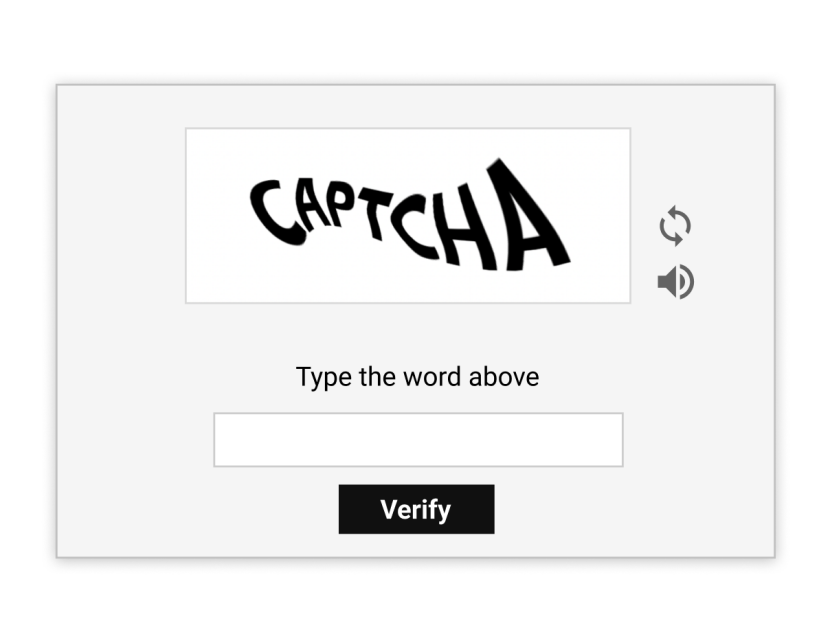
What it is: CAPTCHA stands for “Completely Automated Public Turing test to tell Computers and Humans Apart.” It is one of the earliest and most widely used forms of human verification. CAPTCHA is a category of technology, not a single company’s product. Common solutions include Google reCAPTCHA, hCaptcha, and Cloudflare Turnstile.
What it checks:
- Whether a visitor can complete a human verification task, such as identifying distorted text or selecting images
- Browser environment and behavioral scoring (used by invisible solutions such as reCAPTCHA v3 and Turnstile)
- A user-facing challenge may appear when the risk score is too low
What you may see: An “I’m not a robot” checkbox, image-selection tasks (such as selecting every image containing traffic lights or buses), or no visible challenge at all. Modern solutions increasingly rely on behavioral and environmental scoring rather than puzzles. Real users may be asked to verify repeatedly when their overall risk score is low—for example, due to a shared IP address, poor network reputation, or overly restrictive browser privacy settings.
Common use cases: Login and registration pages, comments and form submissions, password recovery, and checkout pages.
5. Persona
What it is: Persona is an identity verification platform used for Know Your Customer (KYC) checks. Strictly speaking, it is not an anti-bot tool. Cloudflare, PerimeterX, Kasada, and CAPTCHA systems ask, “Is this a bot or a human?” Persona helps answer, “Is this person who they claim to be?” Some platforms escalate to identity verification when behavioral and environmental checks are not sufficient to establish trust.
What it checks:
- Authenticity of identity documents (such as passports and driver’s licenses)
- Facial matching between a selfie and an ID photo
- Liveness checks to help ensure the person is not using a photo or video
What you may see: A redirect to an identity verification page asking you to upload an ID document and take a selfie.
Common use cases: Opening advertising accounts, appealing account restrictions, high-value withdrawals, and financial or cryptocurrency services.

III. How Do These Five Anti-Bot Mechanisms Differ?
Although all five mechanisms are related to website security and automated traffic detection, they serve different purposes.
| System | Layer | What It Checks | What Users May See |
| Cloudflare | Network and combined signals | IP reputation, request characteristics, browser environment, behavior | Interstitial page; occasional challenge |
| PerimeterX / HUMAN | Behavior and device | Fingerprints, interaction behavior, environmental consistency | Press & Hold |
| Kasada | Requests and client | Automation indicators, request characteristics | Usually no visible challenge |
| CAPTCHA / reCAPTCHA | Challenge | Human verification or behavioral scoring | Checkbox, image selection, or invisible check |
| Cloudflare Turnstile | Challenge (often invisible) | Browser environment and behavioral signals | Usually no visible challenge |
| Persona | Identity | Documents, facial matching, liveness | ID upload and selfie |
In short, Cloudflare, Kasada, and HUMAN focus more on detecting and protecting against automated traffic. Persona focuses on user identity and fraud risk, while CAPTCHA is a common way for websites to verify that a visitor is human. These systems may also be used together.
IV. What Should You Do When a Website’s Anti-Bot Systems Block Your Scraper?
Once you understand how website detection works, you can improve legitimate web data collection by managing requests, network environments, and sessions appropriately.
1. Manage Request Frequency Responsibly
A large number of repeated requests in a short period can trigger a website’s access limits. Follow the target website’s access policies and set appropriate request intervals, concurrency levels, and task schedules.
You can also use caching to reduce duplicate requests and avoid accessing the same page unnecessarily.
2. Choose an Appropriate Network Environment
The network environment is an important part of web data collection infrastructure. Websites may serve different content or services in different regions, so choose a network connection that fits your legitimate data collection needs.
For authorized and compliant data collection, IPFoxy proxy services can help manage network access from different regions:
- Rotating residential proxies: Provide residential network exits across multiple regions and can be used for market research and public web data collection.
- Static ISP proxies: Provide long-term residential IP addresses for workflows that require a consistent network connection.
Keep in mind that an IP address is only one factor in a website’s risk assessment. Changing proxy IPs does not guarantee that traffic will pass Cloudflare, Kasada, or other security checks, and it does not replace website authorization or identity verification.
3. Manage Cookies and Sessions Properly
For websites that require login, manage cookies and sessions according to the site’s authentication process. Avoid unnecessary repeated logins or mixing session data.
If a website asks you to verify your identity again, follow its official verification process rather than attempting to bypass its security measures.
4. Prioritize Official APIs and Authorized Data Interfaces
Before collecting data, check whether the target website offers an official API or an authorized data interface.
For websites without a public API, review their terms of service, robots.txt file, and access restrictions in advance. Plan your collection scope and request frequency accordingly.
Conclusion
In 2026, website bot detection has evolved beyond IP-only checks into a multi-layered risk assessment system that combines network, browser, device, behavioral, and identity signals.
Cloudflare, Kasada, PerimeterX, Persona, and CAPTCHA represent different types of website security and verification technologies. For web scraping developers, understanding how these systems work can help diagnose access issues and build stable, compliant data collection workflows.
Choosing an appropriate network environment and managing request frequency and session state responsibly are also essential to improving data collection quality.