












Google Ads, with its massive reach and user base, has become an essential channel for advertising. However, in real-world campaigns, many advertisers run into a frustrating issue: an account that initially performs well suddenly gets flagged for “Circumventing Systems.” In mild cases, ads are restricted; in severe cases, the account is permanently suspended, and even repeated appeals may be rejected.
For teams that rely on ads for customer acquisition, this not only disrupts campaigns but can also lead to customer loss, rising costs, and a breakdown in overall business operations. Understanding how the Google Ads Circumventing Systems policy is triggered—and how to prevent risks at the source—has become a core capability every advertiser must master.
I. What Is Google Ads Circumventing Systems and Why Is It Triggered?
Within the Google Ads policy framework, “Circumventing Systems” is considered one of the most severe violations. It refers to attempts to bypass platform review and risk control mechanisms in order to run content that does not comply with policies. Once detected, this behavior typically results in permanent account suspension and is treated as a strict red-line violation.
From a risk-control perspective, Google Ads does not rely on a single factor. Instead, it cross-analyzes user behavior across multiple dimensions:
- IP address
- Browser fingerprint
- Login patterns
- Ad operation behavior
- Business information
Below is a breakdown of the main reasons that trigger the Circumventing Systems policy.
1.Core Reasons for Triggering Circumventing Systems
(1) Reopening Accounts After Violations
After an account is suspended, many beginners attempt to simply “open a new account and continue.” In Google Ads’ risk logic, this is a typical Circumventing Systems behavior.
If the new account shares similar environment, behavior, or ad content with the suspended account, even with a new email or payment method, it may still be identified as the same entity repeating violations—often leading to immediate permanent suspension.
(2) Multi-Account Association
Google Ads does not prohibit multiple accounts, but it does detect whether the same entity is repeatedly violating policies.
If two or more accounts show strong similarities—such as using the same IP, device, or running identical landing pages and creatives—they may form a “behavioral fingerprint.” Once one account is flagged, associated accounts are highly likely to be suspended as well.
(3) Landing Page or Redirect Cloaking
Using redirects or cloaking to bypass review is a high-risk behavior. For example, submitting Page A for review but redirecting users to a non-compliant Page B.
Google Ads compares crawled content, user access paths, and device environments. If discrepancies are detected between reviewed and displayed content, it will be classified as intentional circumvention. These cases have a very high suspension rate and low appeal success rate.
(4) Repeated Attempts with Disapproved Content
Frequently submitting disapproved ads and continuously modifying creatives to test review boundaries can trigger system alerts.
Google Ads tracks review history, modification frequency, and campaign structure changes. If similar violations are repeatedly attempted within a short period, the system may interpret it as intentional policy evasion—escalating from simple disapprovals to a full Circumventing Systems violation.
(5) False Identity or Business Information
Inconsistent or misleading account information is also high-risk. Examples include mismatched company names, fake addresses, or inconsistent KYC verification data.
Google Ads cross-checks domain ownership, brand consistency, account behavior, and payment details. If the identity cannot be validated, the account may be flagged for circumvention or fraud risk.
(6) Payment Irregularities
Payment issues are not just billing concerns—they are part of risk assessment.
Common risks include declined cards, frequent changes in payment methods, chargebacks, or multiple accounts sharing the same payment tool. If the payment entity does not match the account entity, or abnormal transaction patterns are detected, it may trigger risk control and even be classified as circumvention.
II. How to Avoid Triggering Google Ads Circumventing Systems
Reducing suspension risk is not about “bypassing detection,” but about building a stable, compliant, and authentic operational system across account structure, environment, campaign strategy, and payments.
1.Account Level
- Ensure each account corresponds to a real, independent business entity
- Maintain consistency and authenticity in registration details
- Use a Google Ads Manager Account for centralized management, separating test accounts from main accounts
2.Environment Level
Environment isolation is the foundation of reducing association risk. As mentioned, platforms analyze IP, browser fingerprint (e.g., cookies, canvas), and login behavior. Therefore:
- Use a dedicated environment and browser configuration for each account
- Avoid shared IPs
- Avoid frequent switching of abnormal IPs
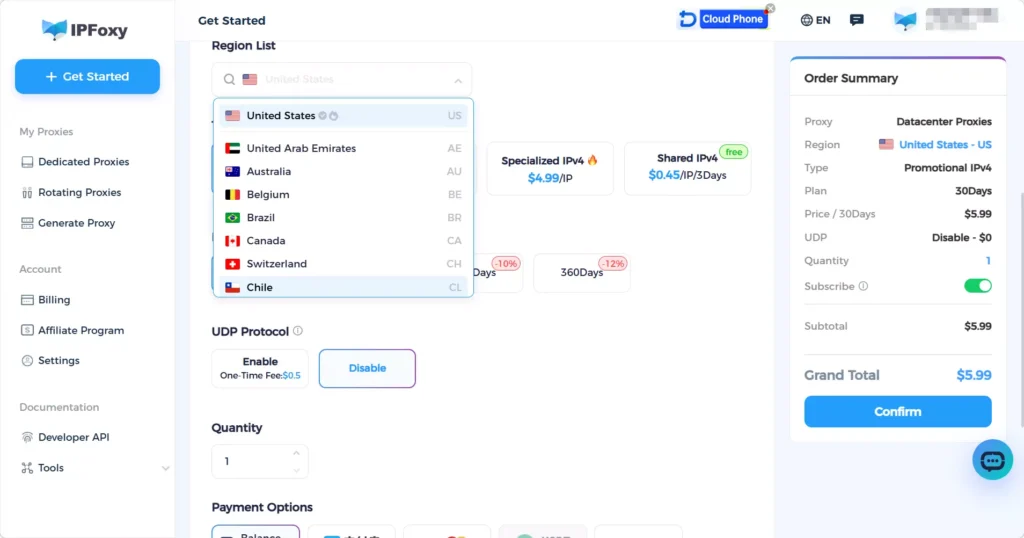
In multi-account or multi-region scenarios, a stable dedicated static residential proxy environment helps maintain consistent behavior. For example, solutions like IPFoxy Proxies’ exclusive IP setup can support cleaner account environments and reduce unnecessary risk signals.
3.Campaign Level
For new accounts, start with low-frequency, stable campaigns to minimize abnormal signals.
- Avoid reusing disapproved ad content
- Do not frequently change campaign structures
- Keep consistency between creatives, keywords, and landing pages, and optimize gradually
4.Payment Level
Each account should use an independent and stable payment method:
- Avoid sharing the same credit card across multiple accounts or frequently changing payment info
- Ensure payment details match the business entity
- Maintain a clean billing history
III. How to Appeal a Suspended Google Ads Account
If your account is suspended, the first step is identifying the root cause before submitting an appeal.
1.Determine Eligibility for Appeal
Check notifications in your Google Ads dashboard and related emails to accurately identify the issue and whether an appeal is possible.
2.Required Fixes Before Appeal
Fixes are critical to success. Submitting an appeal without real changes will almost always result in rejection.
Recommended actions:
- Stop all non-compliant ads and campaigns
- Review and replace risky landing pages
- Ensure account information, company details, and website content are consistent
- Check for association risks in IP, device, and payment setup
3.Preparing Appeal Materials
Clear and complete documentation significantly increases approval chances.
Typically required:
- Account explanation (history and root cause)
- Website and business details (proof of compliance and legitimacy)
- Supporting documents (business registration, brand ownership, product certifications)
These materials should demonstrate that your business is legitimate and that corrective actions have been completed.
4.Appeal Letter Guidelines (Sample Template)
The purpose of the appeal letter is not to argue, but to explain and demonstrate corrective action. Keep it structured and professional, preferably in English:
Dear Google Team,
Our Google Ads Account ID: xxx
Website: xxx
- Company Background – brief introduction (establishment, core business) – business license attached
- Business Validity – store link – customer review screenshots
- Fixes Made – removed all non-compliant ads – updated website policy pages
We understand Google policies and kindly request a re-review of our account.
Best regards,
xxx Company Name
IV. FAQ
Recovery is difficult; only accounts with thorough corrective actions have a small chance of successful appeal.
Opening a new account without fixing issues is usually detected as an associated account and will likely be suspended again.
No. Multiple accounts are not inherently a violation, but risks arise when they are identified as the same entity with repeated or related violations. Using a clean proxy and an Anti-detect browser to build independent environments is recommended.
V. Summary
Whether it’s reopening accounts after violations, multi-account association, cloaking, or repeatedly testing policy boundaries, the core issue is the same: repeated violations combined with attempts to evade detection.
For long-term stable advertising, the key lies in building a real and independent account structure, maintaining environment and payment isolation, and complying with ad and content policies. Once an account is suspended, only after thorough corrective actions and removal of association risks is there any chance of recovery or restarting operations.