











In 2026, Facebook has become one of the most important channels for driving targeted traffic to ecommerce websites. Compared to broad traffic, targeted traffic brings users with clear purchase intent, improves conversion rates, and reduces customer acquisition costs.
Whether through organic content, group engagement, or paid ads, mastering the right strategies and execution is key to achieving stable and scalable website traffic.
This article will systematically cover the core traffic models, step-by-step setup process, precise customer acquisition strategies, and common FAQs to help beginners and operators get started quickly.
Ⅰ. 3 Core Models for Driving Facebook Traffic to Online Stores
Before driving traffic, you need to understand the main approaches. Different models fit different stages, and choosing the right one ensures stable growth.
1. Organic traffic
Traffic is generated through content such as:
- Product reviews
- Usage scenarios
- Short videos (Reels)
This method has low cost and is suitable for beginners without budget, but growth is relatively slow.
2. Group traffic
Acquire targeted users through Facebook Groups:
- Share valuable content in groups
- Guide interactions through comments and messages
- Convert users to your website
This method offers higher conversion rates and is suitable for those aiming for consistent sales, but requires operational skills.
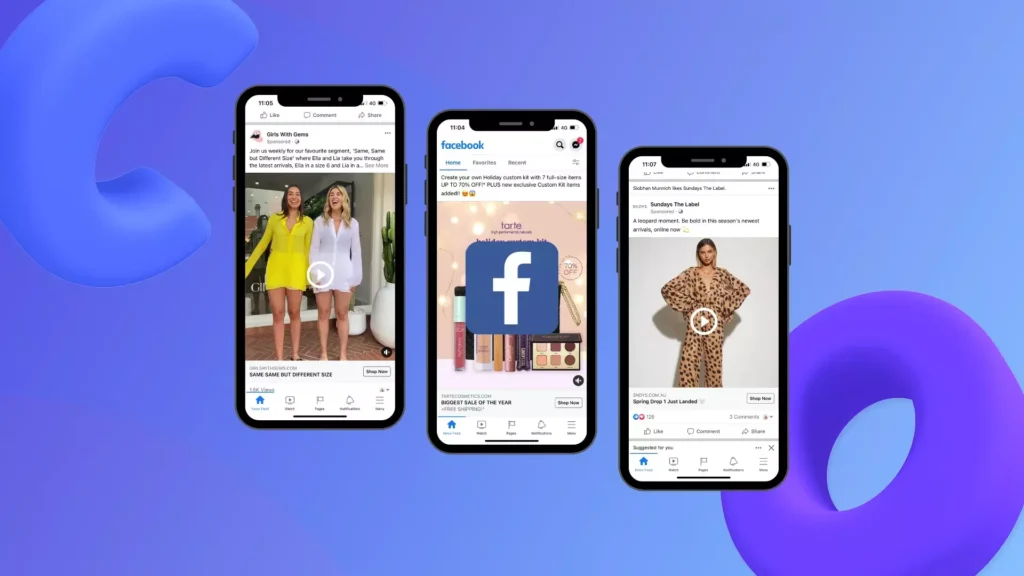
3. Paid advertising
Use Facebook Ads to drive targeted traffic:
- Conversion Ads
- Retargeting Ads
- Advantage+ campaigns
Among them, Advantage+ is strongly recommended by the platform:
- Automatically optimizes audience and creatives
- Reduces manual effort
- Helps beginners scale faster
This model is more suitable for accounts with existing data looking to scale traffic.
Ⅱ. Operational Steps: How to Start Driving Facebook Traffic from Scratch
Many beginners fail not because of content, but because their accounts get restricted early. In 2026, Facebook has stricter reviews for marketing accounts. If the foundation is weak, all later efforts may fail.
1. Build a stable Facebook account environment
If you plan to operate long-term, setting up a stable environment is essential. Many account bans or poor performance come from environment issues:
- Multiple accounts using the same IP can be flagged as linked
- Using low-quality nodes increases multi-account risk
- Inconsistent registration and login environments
- Identical browser fingerprints across accounts, easily detected as the same operator
For large-scale multi-account operations, it is critical to achieve true isolation at the infrastructure level.
At the IP level, using IPFoxy’s dedicated static residential proxy is recommended. Real residential IPs simulate authentic home network environments, allowing Meta systems to recognize activity as genuine user behavior and assign higher trust scores.
At the browser level, an Anti-detect browser should be used to create isolated environments. Even if one account is restricted, it will not affect other accounts in the matrix, reducing systemic risk.
Configuration steps:
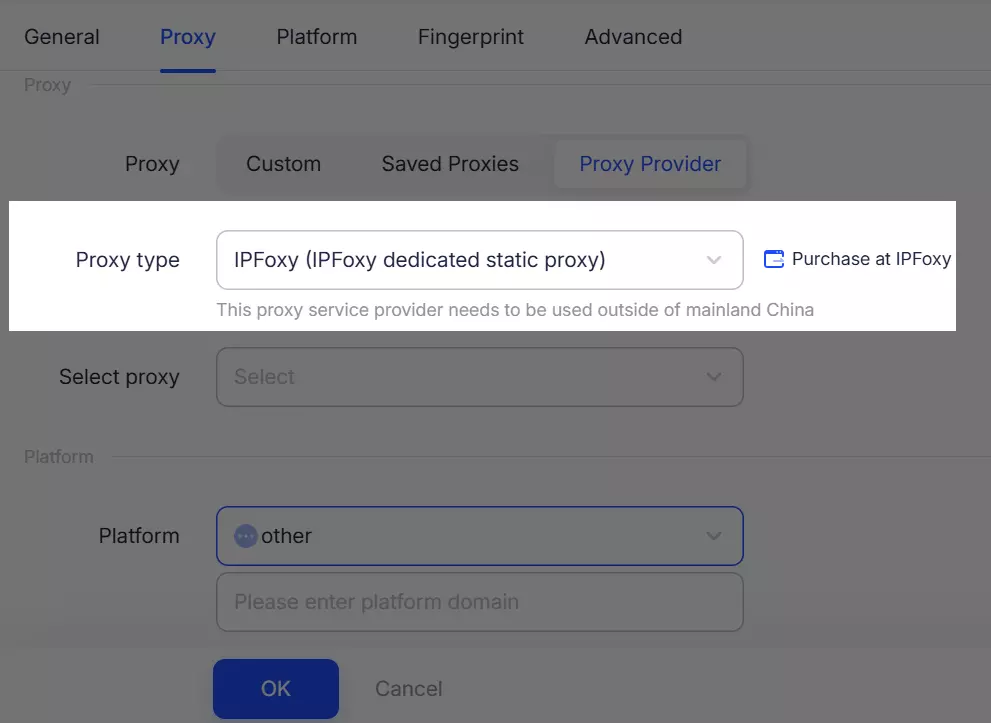
- Obtain proxy details: Choose IP locations that match your target audience and get proxy host, port, and protocol information
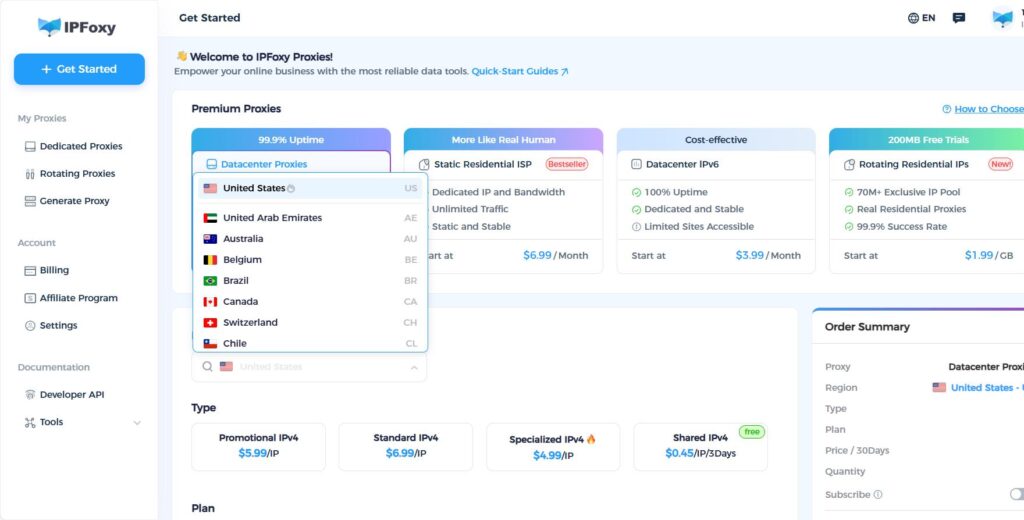
- Configure Anti-detect browser: Set up a dedicated browser profile and integrate IPFoxy’s dedicated static residential proxy to ensure a fully isolated environment
2. Account registration: avoid high-risk actions
Pay attention to the following:
- Use a business email or a new Gmail account
- Avoid using certain phone numbers for registration
- Keep IP consistent between registration and login
Your page is the first impression for customers. Recommended setup:
- Name: Brand name + core product
- Bio: Product info, advantages, target market, website link
- CTA button: Choose “Send Message” or “Visit Website”
- Category: Avoid “Other” and select the most relevant category
3. 7-day warm-up process
After registration, do not start marketing immediately. New accounts need a trust-building phase:
- Day 1–3: Log in 1–2 times daily, browse content, like/comment lightly, follow relevant pages or groups
- Day 4–5: Post 1–2 niche-related posts and maintain normal interaction
- Day 6–7: Publish your first product-related content and gradually start traffic generation
III. How to Get Targeted Customers and High Conversions on Facebook
1. Precisely define your audience
Many beginners struggle with high ad spend and low conversions due to overly broad targeting:
- Refine interest tags: Select 2–3 highly relevant interests instead of many overlapping ones
- 1% Lookalike audience: Upload existing customer data or website visitors to generate high-quality audiences
2. Authentic content converts better
Users are resistant to overly polished ads. Natural and relatable content performs better:
- Capture attention in the first 3 seconds: Use 15–30 second videos showing real use cases or pain points
- Native-style content: Simple mobile-shot videos feel more trustworthy. Combine product features with real customer feedback to improve CTR
3. Start with small budgets for testing
Avoid heavy spending at the beginning:
- Initial budget: Set $5–$10 per ad set per day, optimize for conversions
- 3–5 day testing window: Focus on CPC and conversion rate
- Scaling strategy: Increase budget gradually by 20% if results are good
- Direct landing: Link ads directly to product pages to reduce friction
4. Group strategy for long-term traffic
Facebook Groups are a high-quality free traffic source:
- Value first, promotion later: Share useful tips before posting links
- Build trust: Introduce products naturally after gaining credibility
- Create your own group: Build a long-term traffic pool through exclusive offers and product testing
IV. FAQ
Start with organic traffic to validate products and content. Use ads to scale once you have data.
Common reasons include slow page loading (over 3 seconds) or mismatch between ad and landing page. Optimize mobile speed and ensure direct product links.
Set $5–$10 per ad set daily and allow 3–5 days for learning. Replace creatives if CPC is too high or no add-to-cart activity occurs.
V. Conclusion
By mastering these traffic models and execution strategies, even beginners can achieve low-cost and scalable growth.
A stable environment and authentic behavior are the foundation of long-term success. Continuously optimizing content and ads will help your ecommerce website achieve sustainable growth in 2026.