











In 2026, Mobile Proxy infrastructure has become a core component for cross-border eCommerce, ad verification, and social media operations. Compared to traditional datacenter or residential proxies, mobile IPs are assigned from real carrier networks (3G / 4G / 5G), which typically enjoy a higher trust score within platform risk-control systems.
According to recent benchmark tests, mobile proxies achieve 90%–99% success rates, significantly outperforming other proxy types.
However, a practical challenge arises:
- The number of mobile proxy providers is rapidly increasing, with huge quality differences
- Some emphasize IP pool size, others focus on stability, while some are optimized for account operations
Choosing the wrong provider can directly impact account survival rate and business stability.
In this guide, we’ll break down 6 leading mobile proxy providers in 2026, based on real-world use cases and third-party benchmark data, helping you make a more informed decision.

I. What Is a Mobile Proxy and Why Should You Use It
Before comparing providers, it’s essential to understand the fundamentals.
1. What Is a Mobile Proxy?
A Mobile Proxy routes traffic through IP addresses assigned by real mobile carrier networks (3G / 4G / 5G). In simple terms, it makes your requests appear as if they originate from a real mobile device.
Comparison with other proxy types:
- Datacenter Proxy: Fast but easily detected
- Residential Proxy: More authentic, sourced from home networks
- Mobile Proxy: Highest trust level, sourced from telecom operators
2. Why Are Mobile Proxies More “Secure”?
Closer to Real User Behavior
Mobile IPs come from telecom providers such as Verizon, AT&T, and Vodafone. These IPs typically sit behind Carrier-Grade NAT (CGNAT), meaning hundreds or thousands of real users share the same public IP.
This makes it much harder for platforms to flag traffic as abnormal.
NAT Sharing Reduces Detection Accuracy
Mobile networks rely heavily on NAT (Network Address Translation). Multiple devices and behaviors appear under the same IP, making it difficult for platforms to isolate suspicious activity tied to a single account.
Benchmark data shows:
- Mobile proxies: 90%–99% success rate
- Residential proxies: 55%–70%
- Datacenter proxies: highest block rate
Behavioral Patterns Match Real Users
Mobile environments naturally include:
- IP rotation (due to base station switching)
- Network instability (closer to human behavior)
- More organic activity timing
These characteristics align better with real-user behavior models.
3. Best Use Cases for Mobile Proxies
Mobile proxies are particularly suitable for:
- Social media account scaling (TikTok, Instagram)
- Ad platforms (Google Ads, Meta Ads)
- Cross-border eCommerce accounts (Amazon, eBay)
However, they also come with trade-offs:
- Higher cost ($8–$10/GB on average)
- Slower speed (mobile network limitations)
- Limited IP availability in some regions
For low-risk, high-speed tasks, residential or datacenter proxies may be more efficient.
II. Top 6 Mobile Proxy Providers in 2026 (Tested & Compared)
Here’s a quick comparison based on key metrics:
| Provider | IP Pool | Coverage | Success Rate | Starting Price |
|---|---|---|---|---|
| Bright Data | 7M+ mobile IPs | 195+ | 90–95% | $8/GB |
| Oxylabs | 20M+ mobile IPs | 140+ | 92–96% | $7.5/GB |
| IPFoxy | 15M+ mobile IPs | 200+ | 95–98% | from $5.99/GB |
| IPRoyal | 4.5M+ mobile IPs | 15+ | ~97% | $10/day |
| NetNut | 5M+ mobile IPs | 100+ | 95–98% | $7.6/GB |
| Decodo | 10M+ mobile IPs | 160+ | 92–95% | $4/GB |
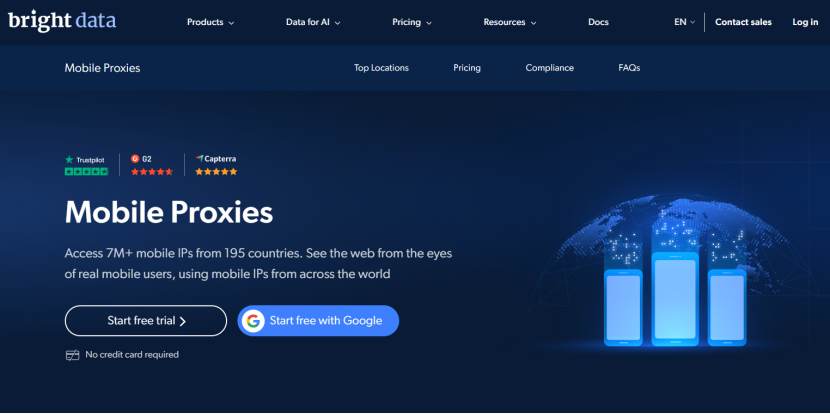
1. Bright Data
A well-known all-in-one proxy provider with strong global coverage.
Performance:
- Success rate: 90–95%
- Response time: 1.5–2 seconds
- Protocols: HTTP(S), SOCKS5
Pros:
- Advanced geo-targeting (ASN, city, ZIP code)
- Built-in scraping tools (Web Unlocker)
- No extra cost for location targeting
Cons:
- Complex dashboard for beginners
- Relatively high pricing
Best for: Enterprise-scale scraping, ad verification
2. Oxylabs
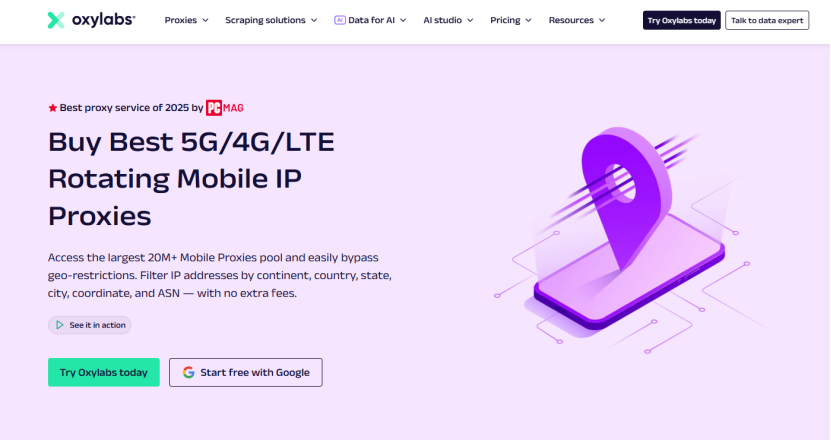
Strong performance in high-protection environments.
Performance:
- Success rate: 92–96%
- Response time: 1.7–2.3 seconds
Pros:
- AI-powered anti-blocking
- GPS-level targeting
- Custom session control (up to 30 minutes sticky IP)
Cons:
- Higher pricing (~$9/GB)
- Limited Android support (HTTP only)
Best for: High-difficulty scraping, SERP data collection
3. IPFoxy
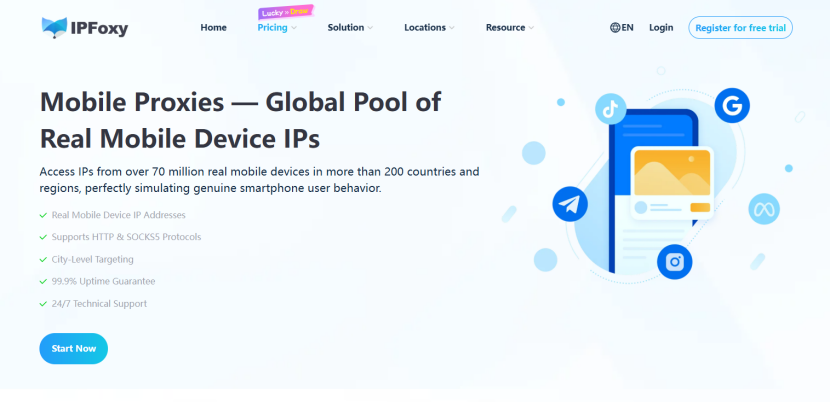
Optimized for real business scenarios, especially multi-account operations.
Performance:
- Success rate: 95–98%
- Low blacklist rate
Pros:
- Designed for account operations (ads, social media, automation)
- Supports rotating & sticky sessions (up to 24h)
- 20–35% cheaper than competitors
Cons:
- No built-in scraping APIs
- Better suited for long-term or bulk users
Best for: eCommerce, social media scaling, automation workflows
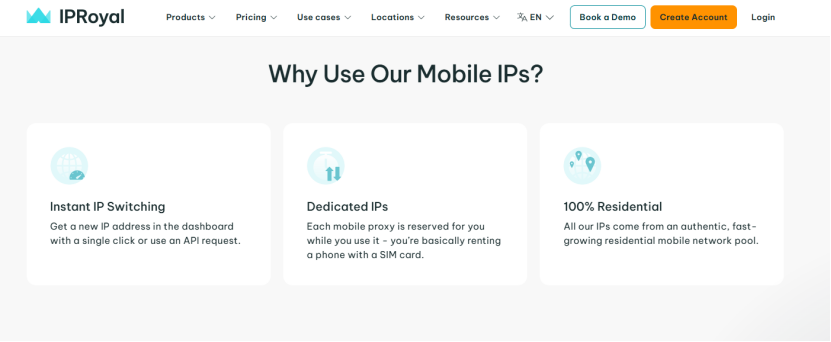
4. IPRoyal
Beginner-friendly and budget-conscious.
Performance:
- Success rate: ~97%
- Response time: ~690ms
Pros:
- Non-expiring traffic
- Flexible pricing (daily unlimited plan available)
Cons:
- Smaller IP pool
- Less stable on high-security targets
- Strict refund policy
Best for: Testing, small-scale usage
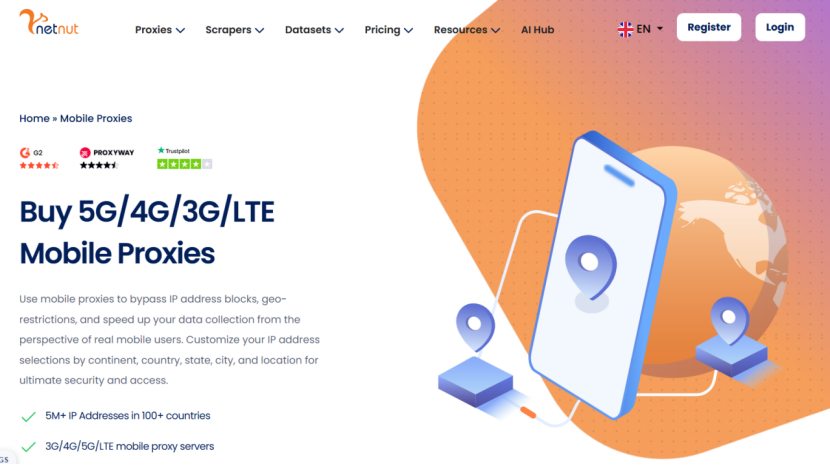
5. NetNut
Uses ISP-direct connections instead of P2P networks.
Pros:
- Low latency, high stability
- Combines residential trust with datacenter performance
Cons:
- Expensive ($99/month for ~13GB)
- No pay-as-you-go
- Complex setup
Best for: SEO monitoring, brand protection
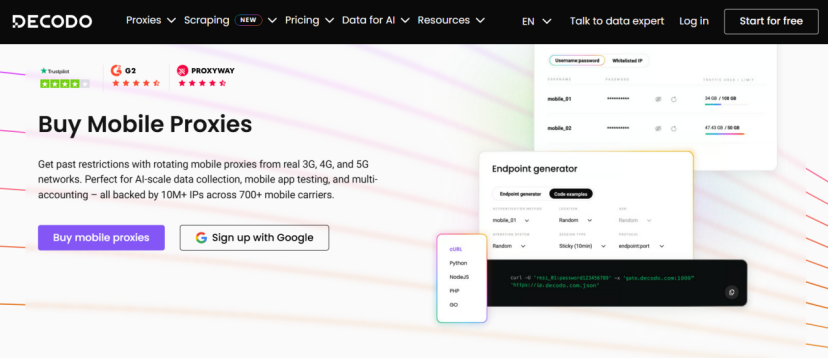
6. Decodo
Balances usability and performance.
Performance:
- Success rate: 90–99%
- Response time: ~0.54s (residential)
Pros:
- Easy setup with browser extensions
- OS-level filtering (iOS/Android)
- Competitive pricing ($4/GB)
Cons:
- Limited rotation customization
Best for: General use, automation tasks
iII. Common Questions About Mobile Proxies
1.Will Mobile Proxies Slow Down My Internet?
Yes—but that’s part of their advantage.
Mobile networks are inherently slower and less stable than fiber connections, which actually makes traffic appear more human-like.
- Mobile proxy latency: ~1.5–2.3 seconds
- Residential proxy latency: ~0.5 seconds
A slight delay is often worth it to avoid bans.
2.Mobile vs Residential Proxies: Which Is Better for Accounts?
Mobile proxies are generally better.
Because of CGNAT, multiple users share one IP, making it harder for platforms to flag individual accounts.
Residential IPs, while real, are usually tied to a single household—once flagged, the risk is higher.
3.Rotating vs Sticky IP: Which Should You Choose?
- Rotating IP: Best for scraping and large-scale requests
- Sticky IP (Session): Better for login, account management, ad operations
Choosing the right strategy is critical for long-term stability.
IV.Final Thoughts
The core value of a Mobile Proxy lies in reducing detection risk—but it is not a standalone solution.
In real-world scenarios, proxies are just one part of the environment. If you only change the IP but ignore device fingerprinting and behavioral patterns, account issues will still occur.
The key is to build a complete, consistent environment, not just swap IPs.