










In 2026, the AI video industry is entering a new phase of rapid consolidation and growth. Across film production, marketing, and e-commerce, AI is being widely used to generate videos and creative content at scale, becoming a new source of traffic and attention. With lower costs and higher output frequency, AI video tools are now one of the most practical solutions for creators and businesses alike.
This article provides a systematic comparison of the most representative AI video generation tools in 2026, focusing on model positioning, core capabilities, and technical characteristics.
I. Positioning Differences of Four Major AI Video Models
1. Sora
Positioning: Backed by OpenAI, Sora stands out for its ability to control the entire video creation process from conceptualization to editing. This end-to-end control fundamentally distinguishes it from most AI video tools on the market.
Key characteristics: Strong narrative understanding, coherent physical logic, mature cinematic language.
Key features:
Text / image / video multimodal generation
Storyboard-based video structuring and Re-cut functionality for re-editing specific segments after generation
2. Veo
Positioning: An automated video tool designed for high-frequency content creators and enterprise marketing teams, balancing generation and post-production. Veo emphasizes intelligent automation to help users generate and edit videos quickly, significantly reducing manual editing time.
Key characteristics: Automated editing, multimodal input, template-driven workflows, batch generation.
Key features:
Secondary editing of generated videos, including trimming, segment replacement, subtitle addition, and voiceovers
Support for simultaneous operation across multiple accounts or projects
3. Runway ML
Positioning: An AI video platform for professional creators and commercial teams. Runway’s core advantage lies in its stable and controllable production workflow, with support for team collaboration and complex scene generation, making it a preferred choice for commercial content production.
Key characteristics: Comprehensive toolchain, high controllability, mature commercialization.
Key features:
Real-time collaboration
Multi-character scene generation
First-frame style control
4. Pika Labs
Positioning: Focused on short-form video and creative expression. Pika Labs excels at fast output and an extremely low learning curve, enabling creators to maintain high-frequency publishing on social media platforms.
Key characteristics: Fast generation, strong stylization, low entry barrier.
Key features:
Stylized output such as animation, cartoons, and creative shorts suitable for social media
Real-time editing, including quick replacement of characters’ clothing or backgrounds for rapid idea validation
II. Core Capability Comparison of the Four AI Video Models
1. Video Production Capabilities
Sora:
Supports up to 1080p resolution with a maximum duration of approximately 60 seconds. Camera motion is smooth and continuous, with a noticeably stronger understanding of physical principles such as gravity, occlusion, and inertia. It is currently the only model capable of sustained narrative continuity.
Veo:
Supports 1080p output with typical video lengths ranging from 15 to 60 seconds. Motion is smooth, with consistent lighting and scene transitions. Veo effectively converts text or image prompts into complete dynamic clips, making it especially suitable for concept demos and short social video content.
Runway ML:
Supports resolutions up to 4K for short segments. While individual clip durations are shorter, output is stable and well-suited for stitching multiple segments into a formal editing workflow.
Pika Labs:
Overall visual consistency is moderate, but stylization is strong and the learning curve is minimal. It is well suited for short-form videos, animation, and exaggerated visual effects.
2. Generation Efficiency and Controllability
Sora:
Generation time is relatively long, but the usability rate of each output is high. The experience is closer to completing a full filming session in a single generation.
Veo:
Generation speed is relatively fast, typically producing a short video within minutes. It supports templates and image guidance, allowing key segments to be re-edited to adjust visual style and editing order, improving consistency and controllability.
Runway ML:
Balances speed and quality, with support for first-frame control and video repainting, making it suitable for iterative refinement.
Pika Labs:
The fastest among the four, with output typically generated within minutes. It also supports instant partial modifications, such as adjustments to digital characters.
III. Advanced Essentials: How to Improve Video Production Productivity
1. Clarify your objectives
Before choosing a tool, clearly define the type of video you want to produce and the desired outcome:
Concept films, storyboards, or world-building visuals → Sora, Veo
Commercial videos with controlled delivery → Runway ML
Product videos, social media content, and high-volume output → Pika Labs, Veo
2. Build a stable foundation
When using AI video tools such as Sora, Runway, Pika, or Luma, creators often encounter common issues that reduce efficiency:
- Unstable requests or generation failures during batch production
- Significant differences in performance and success rates when accessing the same tool from different regions
- Account restrictions or feature limitations when operating multiple accounts simultaneously
- Inability to access services due to platform access restrictions
To ensure more stable batch usage of AI video models, professional creative teams often rely on dedicated proxy environments to build reliable account operation setups. As a global proxy service provider, IPFoxy offers real, clean local proxy resources that meet the access requirements of AI models.
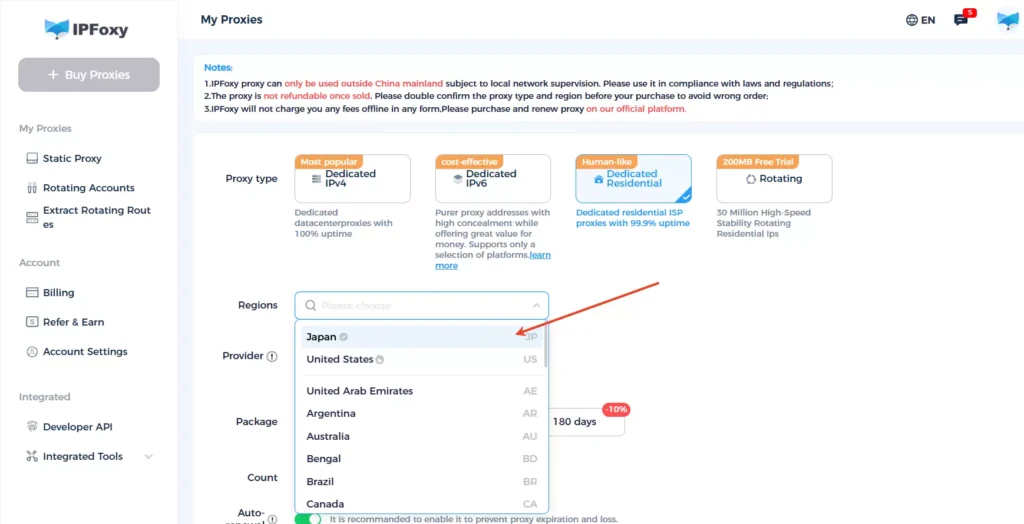
By assigning a dedicated proxy to each account, teams can reduce account linkage risks and minimize detection-related disruptions.
During high-frequency or batch video generation, residential proxy environments can simulate local access conditions, reducing platform restrictions on virtual location accounts and ensuring more stable and reliable video generation workflows.
IV. Frequently Asked Questions
A: AI video models inherently include a degree of randomness. However, large variations may also be caused by peak-time throttling, interrupted or downgraded generation due to network latency, or differences in regional access nodes that affect the actual computing resources allocated.
A: In some cases, this is due to limitations of the model itself. However, if occasional success is followed by repeated failures, the issue is often network-related, such as requests being flagged as abnormal or high-frequency usage triggering temporary risk controls. Switching to a more stable and realistic network environment often alleviates these issues.
A: For long-term, account-based creation, a stable and consistent access environment is preferable to reduce abnormal logins and permission fluctuations, making residential proxy a better choice. For testing and performance validation, a rotating proxy provides greater flexibility and is more suitable.
Conclusion
In 2026, AI video creation is moving rapidly into real-world production. From film-level short projects and concept visuals to social media videos and e-commerce product content, each tool serves a distinct purpose. Sora, Runway ML, Veo, and Pika Labs provide specialized solutions for different creative needs, enabling higher efficiency, lower costs, and faster iteration across film, marketing, and creative content production. Choosing the right model is the first step toward building a high-quality AI video creation workflow.