











Have you experienced this: your video gets dozens or hundreds of views right after publishing, then suddenly stops growing? Or videos that used to easily hit tens of thousands of views now barely get any recommendation traffic?
If your content quality hasn’t noticeably declined but performance keeps dropping, this is likely not random—it may be your channel being “shadow limited” by the YouTube algorithm.
In 2026, YouTube’s distribution system relies more heavily on both behavioral data and content quality. Once risk control is triggered, your channel may be quietly downgraded. This guide shows how to accurately diagnose a shadow ban and provides a practical SOP to recover your traffic.
I. How to Accurately Tell If Your YouTube Channel Is Shadow Banned
1. Check if “Suggested Traffic” disappears
Open YouTube Studio and review traffic sources. Normally, most traffic comes from “Browse Features” or “Suggested Videos.”
If these sources drop close to zero after 48 hours—or traffic mainly comes from your own shares—it strongly indicates your channel has been limited.
2. Watch if “Impressions” flatten
If impressions stop growing shortly after publishing and remain stuck at a low level—even when CTR is high—it suggests the algorithm has placed a traffic ceiling on your content.
3. Use the latest 2026 verification methods
- Comment visibility test: Post a comment using your own account, then check it in incognito mode. If the comment is not visible, your account may have been flagged as low trust.
- Full title search test: Search your exact video title in incognito mode. If it does not appear or ranks below unrelated low-quality content, your channel may have been removed from priority recommendations.
II. 4 Core Reasons Why YouTube Channels Get Limited in 2026
1. Unclean operating environment
This is one of the most common issues for professional creators. YouTube’s risk control system continuously monitors login environments:
- Low-quality network environment: Frequent use of unstable nodes or datacenter IPs may cause the system to identify your behavior as automated.
- Account association risk: If other accounts under the same IP are banned due to violations, your channel may also be marked as high-risk, leading to traffic suppression.
2. Highly repetitive content and excessive AI footprint
YouTube has significantly improved its ability to detect low-quality content:
- Reused or low-transformation content: Simple edits of other videos or directly copying trending scripts are classified as duplicate content, which cuts off recommendation traffic.
- Low-value AI content: While AI is allowed, mechanically assembled content without meaningful value is treated as spam and will not be distributed.
3. Over-optimized SEO
Trying to chase trends through excessive packaging often backfires:
- Clickbait titles: Titles that do not match actual content lead to rapid viewer drop-off. Extremely low average watch time can trigger algorithmic suppression.
- Keyword stuffing: Filling descriptions with irrelevant trending keywords is identified as misleading metadata in 2026.
4. Fake engagement and abnormal behavior
- Purchased likes or subscribers: The algorithm can easily detect fake engagement without real viewing behavior, triggering suppression mechanisms.
- Frequent changes: Deleting videos, modifying titles, or frequently changing channel positioning in a short time can invalidate your audience profile and push the channel into a relearning phase.
III. 2026 YouTube Channel Recovery SOP (Step-by-Step)
1. Stop all activity during the cooldown period
Within the first 48 hours after detecting a limitation, pause all operations to allow the algorithm to reset signals:
- Stop publishing any new videos, including Shorts
- Stop interacting in your own comment section
- Stop modifying titles, descriptions, or tags of existing videos
2. Optimize your operating environment
In 2026, YouTube applies strict checks on device consistency and IP quality, making this step critical:
- Use a clean and stable IP: Avoid frequent switching or shared datacenter proxies. A dedicated static residential proxy is recommended. For example, IPFoxy provides high-quality dedicated static residential IPs with strong authenticity and stability, significantly improving account reliability when paired with a fixed device and consistent environment.
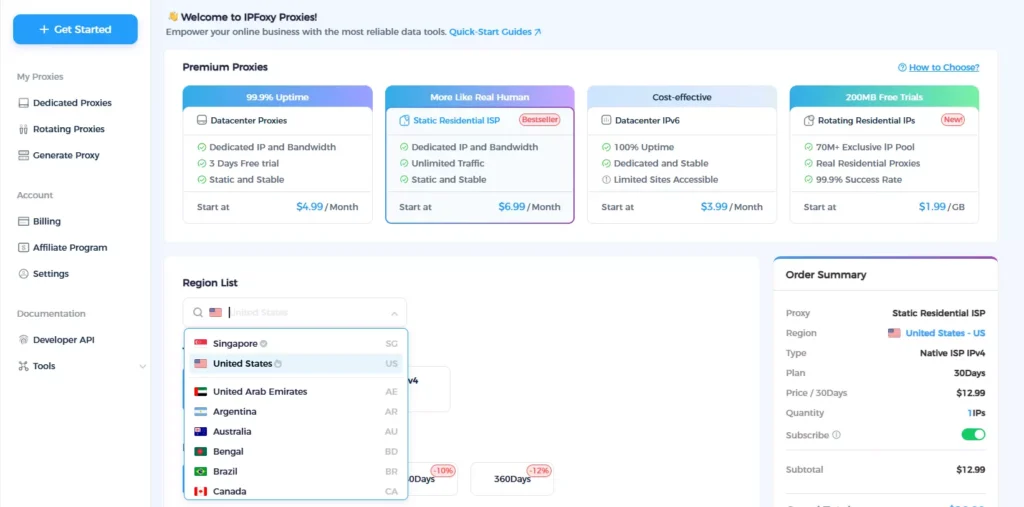
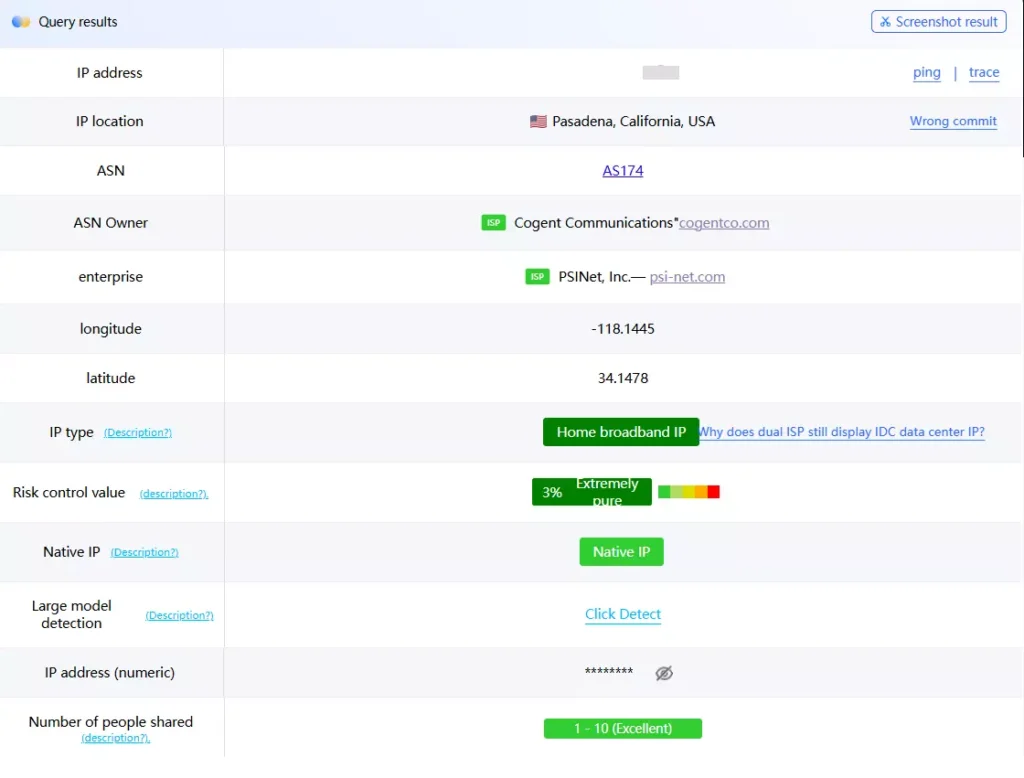
- Check IP reputation: Historical behavior and trust scoring are key indicators of IP quality. IPs that are overused or associated with abuse are more likely to be flagged. While there is no universal standard, mainstream IP checking tools can be used for evaluation. Tests show that IPFoxy’s native dedicated static residential IPs maintain high cleanliness and stability, effectively avoiding risk-control blacklists caused by datacenter IPs.
- Simulate real user behavior: During recovery, spend 15 to 30 minutes daily watching content within your niche, and interact naturally through likes and comments.
3. Clean up problematic content
Conduct a full audit of your channel:
- Handle risky videos: Videos involving copyright issues, high duplication, or extremely low impressions should be hidden rather than deleted, as deletion may reduce total watch time weight.
- Fix SEO issues: Remove irrelevant keywords and tags to avoid misleading metadata signals.
4. Use Shorts to regain initial traction
After the cooldown period, use Shorts to test whether distribution is recovering:
- Publish frequency: Post one fully original, high-quality Short per day
- Performance observation: If views exceed 1,000 to 2,000, it indicates that the restriction is starting to loosen
5. Resume long-form content and send feedback
Once Shorts performance stabilizes, gradually resume long-form content:
- Content strategy: Prioritize face-cam or in-depth commentary to enhance authenticity
- Send feedback: In YouTube Studio, use the “Send Feedback” feature and provide a clear and objective message such as:
“I noticed my videos are not visible in search results. I have checked and ensured compliance with all community guidelines. Please help verify my channel status.”
IV. Long-Term YouTube Growth Strategy in 2026
1. Data-driven content optimization
Use data analysis combined with AI tools to continuously refine your strategy:
- Daily and weekly monitoring: Track audience retention and optimize editing based on drop-off points
- AI-assisted analysis: Use tools like ChatGPT to identify abnormal fluctuations in CTR and other key metrics
- A/B testing: Regularly test different thumbnail styles, such as text-based, face-focused, and contrast-driven formats, to determine the highest-performing visual strategy
2. Optimize GEO (Generative Engine Optimization)
With deeper integration between YouTube search and AI systems, content distribution logic has evolved:
- Increase information value: The algorithm prioritizes unique content. Add real test data, niche expertise, and differentiated materials
- Build structured metadata: Use clear layouts in descriptions with precise keywords and timestamps
3. Maintain authentic account behavior
The system calculates trust based on behavioral patterns:
- Maintain niche consistency: Keep viewing, searching, and interacting within your content category
- Control metadata changes: Avoid frequent large-scale edits to titles, tags, or descriptions
V. FAQ
No. Bulk deletion damages total watch time weight. It is recommended to set potentially problematic or low-quality videos to private instead.
No. Switching to a dedicated static residential proxy helps rebuild the underlying environment, but the algorithm typically requires 7 to 14 days to reassess the account. During this period, consistent real-user behavior is necessary to rebuild trust.
Zero views are usually caused by environment issues.Around 2400 views typically indicates a traffic ceiling
VI. Conclusion
YouTube traffic limitation is not irreversible. The key lies in accurate diagnosis, proper handling, and avoiding continuous negative signals.
By optimizing your environment, improving content quality, and maintaining compliant operations, most channels can gradually recover their recommendation traffic.
In the long run, a stable account environment and authentic user behavior are the foundation of sustainable growth. Instead of repeatedly reacting to limitations, building a scalable and consistent operation system is the most effective way to achieve long-term traffic stability.