












In the digital marketing ecosystem, Facebook Ads and Google SEO/Google organic rankings are often discussed together. Some believe that running Facebook Ads will directly improve organic rankings, while others claim the two are completely unrelated. What’s the truth?
Based on existing practical experience, industry data, and underlying marketing logic, this article clarifies whether Facebook Ads can truly boost Google organic rankings and provides actionable optimization strategies to help you avoid detours.
I. How Optimizing Facebook Ads Impacts Google Rankings
1. What is the Core Purpose of Facebook Ads?
Facebook Ads is essentially a paid traffic channel:
- Leverage Meta’s (Facebook/Instagram) massive user base to accurately reach target audiences;
- Drive exposure → clicks → conversions to generate business leads or sales;
- The ad system optimizes delivery based on pixel data and conversion tracking to improve ROI.
In other words, the core of Facebook Ads is to help brands quickly gain user exposure and conversions, rather than directly influencing search engine algorithms.
2. The Impact of Facebook Ads on Google Rankings
(1) Increase Brand Traffic and Engagement Metrics
Paid ads can quickly drive a large number of users to your website. If these users demonstrate high engagement (long stay time, multiple on-page views), it signals to search engines that the page has increased value, which benefits long-term SEO performance.
(2) Boost Backlinks and Social Traffic
Promote high-quality content via ads → attract users to read, share, and repost → potentially generate external links, a crucial factor for SEO.
(3) Enhance Brand Search Volume
When users see Facebook content and develop interest, they may search for your brand or products on Google. Such brand-related searches increase overall organic site traffic, helping to stabilize rankings.
Key Takeaway:
While Facebook Ads won’t directly improve Google’s organic ranking scores, it can trigger SEO-friendly behaviors by optimizing website traffic composition, increasing high-quality visits, and boosting brand awareness.
II. How to Optimize Facebook Ads to Boost Rankings
Since Facebook Ads can’t directly change SEO rankings, our goal should be to optimize campaigns so that user behaviors driven by ads genuinely deliver positive value for organic search.
1. Align Ad Goals with SEO Strategies
To balance social media ad performance and SEO results, your Facebook Ads shouldn’t solely focus on “exposure and clicks.” Instead, target valuable user actions:
- Promote high-quality content (e.g., blog posts, authoritative guides) to drive in-depth reading, longer stay times, and sharing, thereby increasing content authority.
- While promoting pure sales pages yields high conversions, their indirect value for SEO is lower than that of content-driven landing pages.
2. Use Meta (Facebook) Pixel to Effectively Track Website Visits
Facebook Pixel is a core tool for ad conversion optimization and audience segmentation. It can track:
- Browsing behavior
- Cart additions
- Form submissions
- Actual conversions, etc.
Install Pixel alongside the Conversion API on your website to enable the system to accurately identify high-value users. Then optimize ad delivery to focus on audiences more likely to engage.
This approach offers two key benefits:
- Improve conversion efficiency;
- Drive high-quality traffic, allowing Google to observe stronger engagement signals.
3. Ensure Ad Content is SEO-Friendly
Since Facebook Ads ultimately direct users to your website:
- Landing page content must align with ad content. Consistency enhances user experience and helps reduce bounce rates.
- Promote in-depth, valuable, and shareable content. Posts shouldn’t only focus on conversions—prioritize industry insights, brand stories, and guide-style content, as these are more likely to be cited and linked by other sites.
4. Implement a Systematic Delivery Strategy
(1) Precise Audience Segmentation
Split audiences into tiers (e.g., new visitors, engaged users, past purchasers);
Use Lookalike Audiences to expand target groups, improving conversion rates and driving low-cost, high-quality traffic.
(2) Optimize Ad Creatives and Messaging Structure
Adopt a clear visual + pain point-focused copy framework, with distinct value propositions and calls-to-action (CTAs);
Videos significantly boost engagement and stay times—these are positive “behavioral signals” for website SEO.
5. Maintain Account Stability and Delivery Environment
In actual Facebook Ads campaigns, poor performance is often due to account environment issues rather than creative quality. This is especially true for sellers managing multiple accounts—ignoring IP and network environments can easily trigger risk controls.
Therefore, a compliant, stable proxy IP is essential:
- Provide each ad account with an independent, consistent network identity;
- Simulate the real network environment of users in target countries;
- Reduce the risk of account association;
- Protect pixel data and Lookalike data from contamination by abnormal environments.
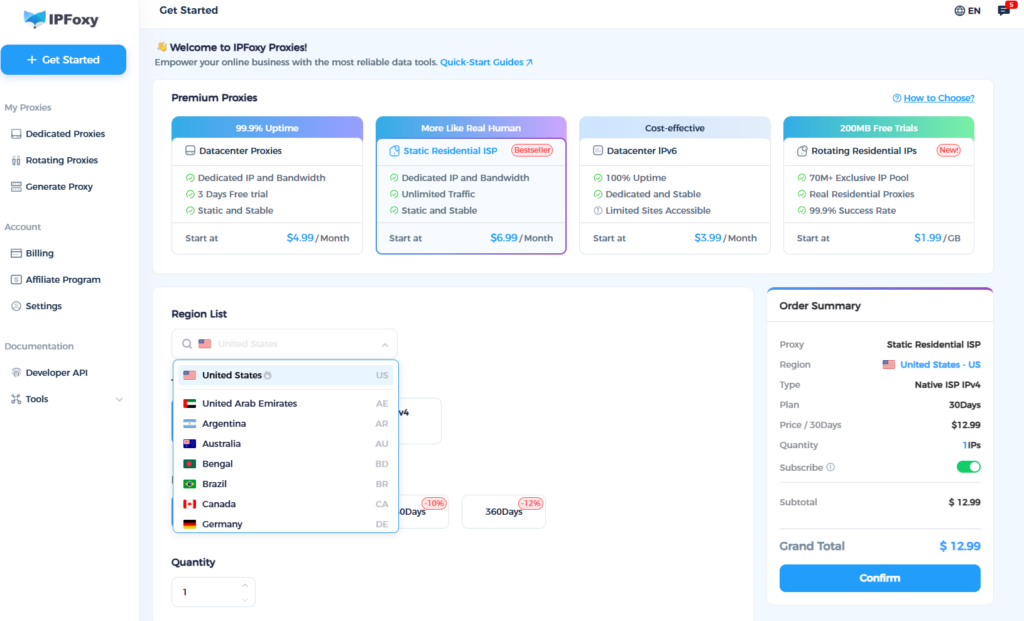
In practice, more and more ad teams use IPFoxy to build stable ad environments, mainly for the following reasons:
- IPFoxy’s residential proxies are sourced from real home networks, making them more secure than data center IPs;
- Supports dedicated IPs to avoid account association—each ad account can be bound to a unique IP, effectively preventing contagious account restrictions caused by shared networks across multiple accounts;
- Covers multiple countries and regions—choose IPs matching your target ad markets to align login environments with delivery regions, enhancing account credibility;
- High stability for long-term campaigns—stable IP connections with minimal disconnections or switches support the continuous accumulation of healthy account data, ensuring stable delivery and learning phases.
By combining IPFoxy with a sound account management strategy, you can significantly reduce the risk of account restrictions, enabling Facebook Ads to consistently drive high-quality traffic in a stable environment—laying the groundwork for positive user behavior data, brand searches, and indirect SEO improvements.
6. Data Analysis and Iterative Improvement
Use analytics tools to track:
- Page stay time;
- Behavioral trends after ad clicks;
- Depth of visit.
These data points help you assess how ad campaigns impact SEO metrics (e.g., bounce rate, number of pages viewed). Continuous iteration to improve ad conversions and content quality is key to maximizing the synergistic effect of ads and SEO.
Conclusion
Facebook Ads won’t directly boost Google organic rankings, as search algorithms and ad delivery systems are inherently separate and independent. However, properly optimized Facebook Ads can indirectly support long-term SEO results by improving user behavior, increasing brand exposure, and creating backlink opportunities.