











Many people encounter a frustrating problem when operating platforms, running ad campaigns, or managing multiple accounts: even if they follow all the rules, their accounts are frequently hit with risk control, restricted traffic, or even permanently banned. After investigating all possibilities, you may find that the issue often lies not in the content or operations, but in a severely underestimated factor—IP and account environment.
IP is the first gateway for platforms to identify your identity and environment. This article will systematically explain why IP triggers risk control from a practical perspective and how to complete IP purity checks step by step, helping you reduce the risk of account restrictions at the source.
I. What’s the Connection Between Frequent Account Risk Control and IP?
1. How Do Platforms Identify You Through IP?
Nearly all major platforms (such as Google, Meta, TikTok, PayPal, etc.) conduct long-term profiling of account login environments, and IP is the most basic and high-weight identification dimension, mainly including:
- Whether the IP’s country/region is reasonable
- IP type (residential / data center / server room)
- Whether the IP has been used by multiple or bulk accounts
- Whether the IP has a history of violations or abuse
- Whether the IP matches the device fingerprint and account behavior
Once an IP is marked as an abnormal environment, the account is likely to be closely monitored by the system, even if all operations are standardized.
2. Common Scenarios of Risk Control Caused by IP
Many people have fallen victim to the following situations:
- Multiple accounts sharing the same IP for a long time, leading to mutual implication
- Using cheap proxy IPs that have been abused and come with a “black history”
- The IP’s displayed country is inconsistent with the account’s registration/location country
- Frequent IP switching, jumping across countries or cities in a short period
- Mixing local networks with VPN tools, resulting in chaotic environment fingerprints
The consequences: at best, traffic restrictions or verification requirements; at worst, immediate account suspension with little chance of appeal.
Platform risk control operates on a probability model, and an impure IP significantly increases your “risk weight.” When the IP itself is deemed a high-risk source, your account starts on the wrong foot.
II. Comprehensive Guide to IP Purity Check
1. Verify the Basic Rationality of IP Attributes
First, clarify three fundamental pieces of information:
- IP’s country/city: Is it consistent with your account’s target market?
- IP type: Residential IP is preferred, followed by high-quality ISP IPs
- Whether the IP is fixed/exclusive: Avoid shared IPs among multiple users
If the IP’s country is incorrect or it is clearly a data center IP, it’s advisable to discard it immediately.
2. Check if the IP is Flagged by Platforms or Risk Control Systems
Common detection dimensions include:
- Whether it is identified as a proxy/VPN
- Whether it has a history of abuse or spam traffic
- Whether it is on the blacklist of ad platforms or payment platforms
If an IP is marked as high-risk by multiple detection systems, do not use it even if it is cheap.
3. Use Tools for IP Purity Detection
In addition to manual judgment, always use third-party detection tools for cross-validation to avoid invisible issues. Below are commonly used and reputable foreign IP detection platforms in practical operations:
1) IP Risk and Proxy Identification Tools
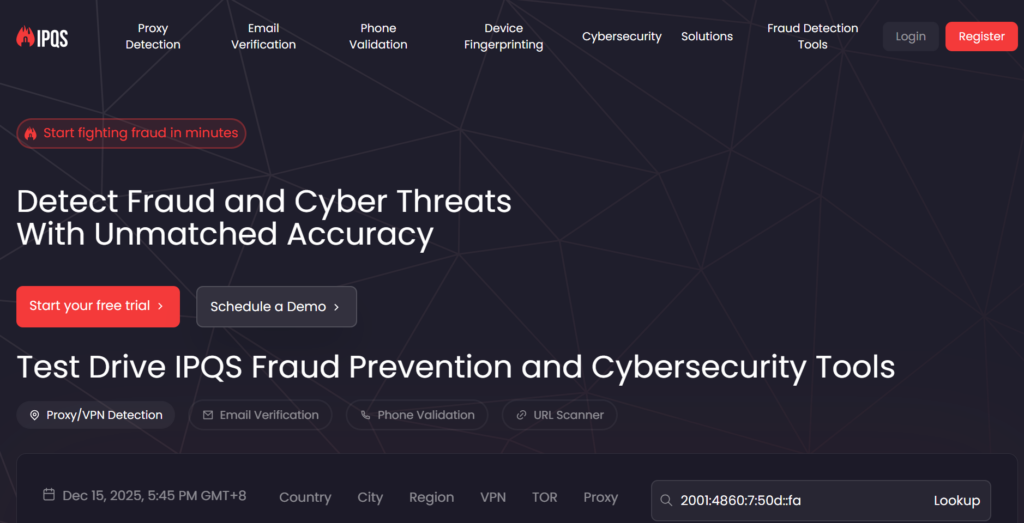
- IPQualityScore: Mainly used to detect if an IP is marked as a proxy, VPN, or abusive IP. It is highly valuable before ad placement or payment platform registration.
- Scamalytics: Judges if an IP has a history of fraud or abnormal access through a risk score—the higher the score, the greater the risk.

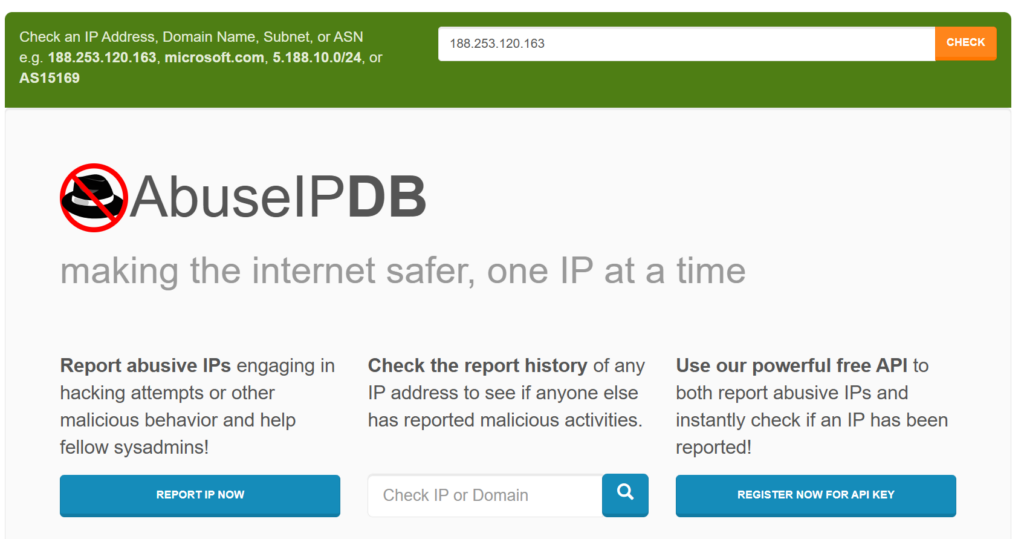
- AbuseIPDB: Used to check if an IP has records of spam traffic, attacks, or abuse, suitable for identifying “black history IPs.”
2) IP Attribute and Location Verification Tools
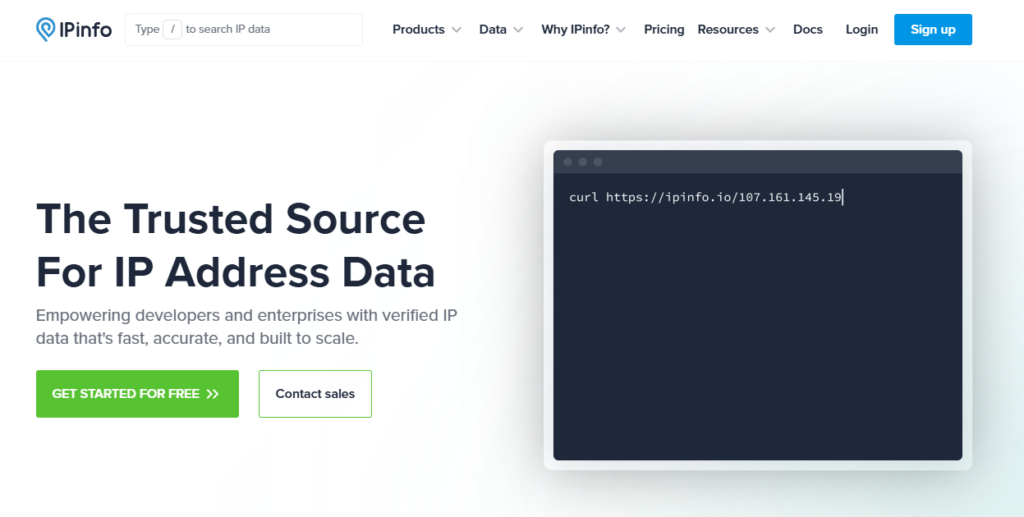
- IPinfo: Checks the IP’s country, city, ASN, and ISP, verifies if it is a residential network, and confirms location accuracy.
- Whoer: Commonly used to detect if an IP exposes proxy characteristics, while checking if browser settings, language, and time zone match the IP.
3) The Importance of Cross-Validation with Multiple Tools
It’s crucial to note:
- A “low-risk” result from a single tool ≠ the IP is definitely safe
- Different platforms have different data sources, leading to potential discrepancies in results
Practical suggestion: Use at least 2–3 tools simultaneously. If any tool shows obvious “high-risk” or “proxy exposure” warnings, the IP is not suitable for core accounts.
4. Ensure Consistency Between IP and Account Environment
IP purity alone is not sufficient; it must be matched with the overall account environment:
- IP country ≠ system language ≠ time zone → High risk
- IP remains unchanged for a long time, but devices are frequently replaced → Abnormal
- IP does not match fingerprint browser parameters → Easy to be identified
The IP must form a “real user closed loop” with the device fingerprint and browser environment; otherwise, its purity will be compromised.
5. Professional Proxy Services Are More Suitable for Long-Term Operations
Many people randomly purchase proxies and encounter constant issues. The core reasons are:
- Opaque IP sources, with no way to confirm if they have been abused
- Lack of optimization for platform risk control
- Poor stability, with frequent disconnections and switches
This is why professional, compliant proxy services are more recommended for long-term, multi-account, or high-value businesses.
Amid increasing demands for IP purity and stability, the widespread use of IPFoxy is no coincidence. Its core advantages include:
- High-quality residential IP resources: Real IP sources from non-abused segments, reducing the risk of platform detection
- High IP purity: Strict screening and maintenance of IP pools to minimize historical blacklist issues
- Wide regional coverage and precise positioning: Country and city-level options, closely simulating real users
- Strong stability: Suitable for long-term scenarios such as account registration, account nurturing, and ad placement
- High compatibility with fingerprint browsers: Easier to build a consistent and sustainable account environment
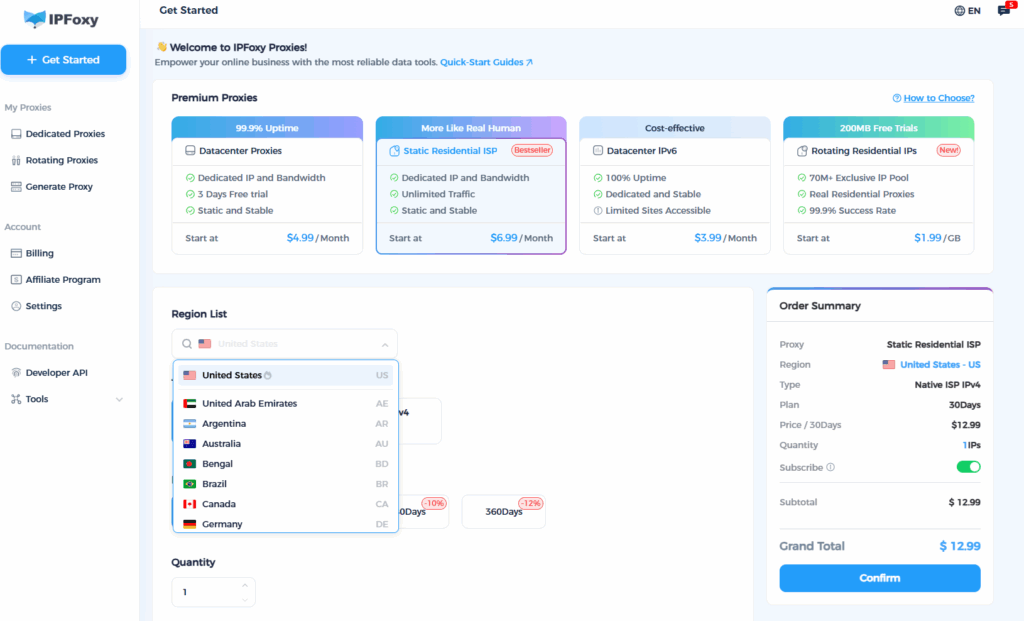
From a practical perspective, IPFoxy helps you create a network environment that closely resembles a real user—this is the state long permitted by platforms and most easily approved by risk control models. Its IP detection results are shown in the figure below:
Summary
Frequent account risk control is often not due to incorrect operations, but because the IP and account environment are impure from the start. Learning to perform IP purity checks and choosing stable, reliable proxy services are the fundamental guarantees for long-term account operations.