










Many new independent site sellers face the same problem: their sites are launched and content is published, but Google either doesn’t index them or indexes them extremely slowly. No indexing, no rankings; no rankings, no search traffic; no search traffic, and independent sites naturally can’t make sales. This article will thoroughly answer: Why isn’t Google indexing your independent site? What exactly should you do for independent site SEO? What are the immediately actionable optimization methods? Would you like me to refine the translation to be more concise for marketing scenarios or keep it consistent with the formal tone of the guide?
I.Why Independent Sites Must Do Google SEO?
1. What is Google Indexing?
Google Indexing refers to Google crawlers visiting your website, crawling page content, and adding it to Google’s search database. Only when indexed can the website appear in search results.
The process is: Seen by Google → Archived by Google → Opportunity to be seen by search users.
2. Why Must Independent Sites Do SEO?
Independent sites naturally struggle more to get traffic than platforms, and SEO is the most long-term, low-cost, and stable traffic source.
Core values of SEO include:
- Driving organic search traffic (free of charge)
- Enhancing brand credibility
- Improving targeted conversion rates
- Achieving long-term compound growth
3. What Happens If You Don’t Do SEO?
- Published website pages receive no visits
- Your site can’t be found even when searching for the brand name
- Meta/Facebook advertising costs keep rising
- Low site authority makes it hard to sell products long-term
SEO is not a nice-to-have but the core traffic channel for independent sites.
II.Comprehensive Guide to Independent Site SEO Optimization Methods & Strategies
1. Enable Google to Crawl Your Site: Perfect Essential Configurations
(1) Set Up Google Search Console (GSC)
The first thing to do after launching a new site:
- Add the site
- Verify domain ownership
- Submit sitemap.xml
- Check crawling status
GSC is the only official tool to monitor if your website is visible to Google.
(2) Ensure Robots.txt Doesn’t Block Crawlers
Many beginners use templates where robots.txt blocks crawlers by default, preventing Google from accessing pages. Always check that robots.txt allows crawler access.
(3) Configure IP & Account Environment
To get Google to crawl your independent site, besides basic technical configurations (GSC, sitemap, robots.txt, etc.), there’s a crucial often-overlooked factor: the stability of your account and access environment.
Many independent site sellers face these issues when doing SEO:
- Different team members log into GSC from different devices and IPs
- Frequent cross-country/device switches trigger Google’s “abnormal activity” alerts
- Passive additional verification, account freezes, or data delays
To ensure stable crawling, your SEO operation’s IP and account environment must be stable, clean, and trustworthy.
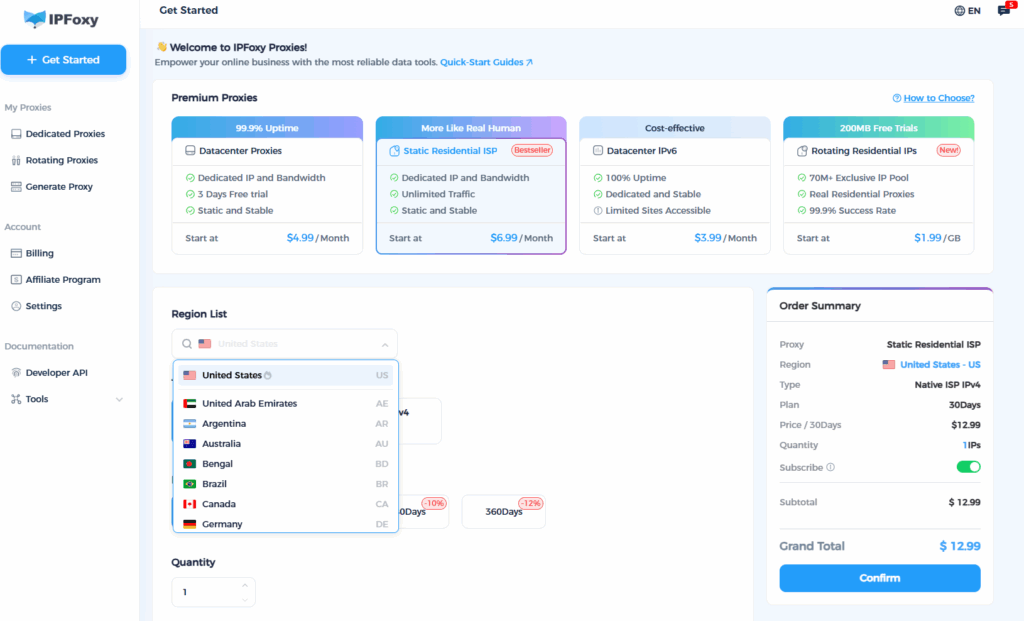
Solution: Use IPFoxy’s professional residential IP proxies + fingerprint browser:
- Leverage real local user exit residential IPs for high credibility, purity, and stability. Pair with a fingerprint browser to create an independent environment for each independent site, avoiding mutual interference.
- Support precise location selection by country/city, allowing you to check Google rankings as seen by users in different regions and improve SEO accuracy.
- High uptime and stability, suitable for long-term SEO optimization tasks.
IPFoxy’s residential proxies are highly useful if you want Google to crawl your site more stably, boost indexing success, and reduce backend abnormalities.
2. Content SEO
Google’s core logic: Valuable content → Faster indexing → Better rankings.
(1) Start with Keywords: Choosing the Right Words Matters More Than Writing Content
Strongly recommend independent sites focus on these keyword types:
- Product keywords
- Purchase intent keywords
- Problem-solving keywords
- Scenario-based keywords
Key methods:
- Use Ahrefs, Semrush, [Keywordtool.io](Keywordtool.io) for keyword research
- Select long-tail keywords with low difficulty (KD < 20)
- Focus on one primary keyword per piece of content
(2) Write Content Structures Google Loves
Recommended content structure:
- Clear title (H1)
- Bullet point logic (H2 / H3)
- Insert product scenario images
- FAQ section (structured data earns extra points)
- Internal link layout
Google’s content judgment logic essentially boils down to: Clarity, structure, and problem-solving.
(3) Maintain Content Update Frequency
For new sites:
- Publish at least 2–3 pieces of content per week
- Optimize old content
- Expand internal link network
Googlebot determines crawling frequency (crawl budget) based on your site’s update frequency.
3. Backlinks/Brand Authority
(1) Backlinks Remain One of Google’s Strongest Ranking Signals
Key channels:
- Industry media (PR)
- Guest posts on niche blogs
- Answers on Reddit / Quora
- Backlinks in YouTube video descriptions
- Resource Pages
Backlink quality matters far more than quantity. Backlinks determine how Google values your website.
4. Tips to Accelerate Google Indexing
(1) Proactively Submit URLs After Publishing Each Article
Go to GSC → URL Inspection → Enter the link → Request Indexing.
(2) Drive Indexing Through Internal Links
New pages must be recommended by old pages:
- Edit 2–3 old articles to add links to the new page
- Add cross-internal links between product pages
Googlebot crawls along links; more internal links mean faster crawling.
(3) Create and Update Sitemaps Regularly
WordPress and Shopify can generate sitemaps automatically.
Ensure:
- New pages are promptly added to the sitemap
- The sitemap is successfully bound in GSC
Summary
To boost Google indexing rate for independent sites, the essence is to let Google crawl your content faster, more frequently, and completely. SEO isn’t an overnight success but a continuous optimization process. As long as your site has a clear structure, authentic and valuable content, and a clean, trustworthy environment, Google will reward you with more crawling opportunities and higher rankings over time.