











In fields like cross-border e-commerce, multi-account management, and data scraping, network proxies are essential. Yet businesses often face a dilemma: fast datacenter proxies get blocked easily, while dynamic residential proxies lack the stability needed for long-term logins.
ISP proxies (static residential proxies) bridge this gap. By fusing datacenter speed and uptime with the high trust of real residential IPs, they deliver an undetectable, rock-solid network identity—making them the premier choice for professional digital operations.
I. What Is an ISP Proxy?
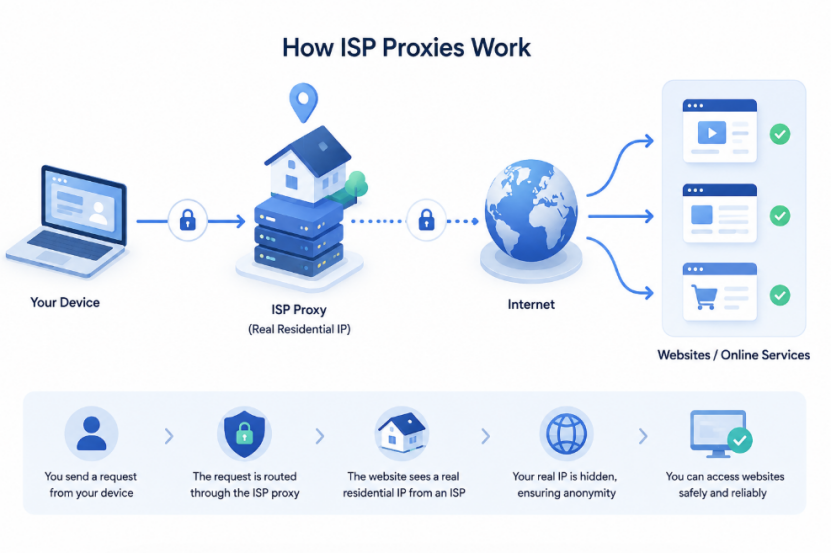
An ISP (Internet Service Provider) proxy, also referred to as a static residential proxy, is a specialized proxy type. Its IP addresses are directly assigned by Internet Service Providers (such as Comcast, AT&T, Verizon, or China Telecom) but hosted on professional datacenter servers for user access.
Simply put, an ISP proxy is a hybrid model: it combines the authentic identity of a residential IP with the high performance of a datacenter IP.
Breaking Down the Terms
- ISP: Stands for Internet Service Provider, emphasizing that the IP originates from a legitimate telecom operator rather than a datacenter facility.
- Static: Indicates that the IP address remains fixed throughout your subscription period. Once assigned to you, it stays yours as long as you maintain your plan.
Think of an ISP proxy as a fixed residential internet connection from a specific city or country. It carries high credibility because it utilizes real telecom lines used by local residents.
II. Key Features of ISP Proxies: How Do They Differ from Other Proxies?
ISP proxies are favored by professional users due to several distinct advantages:
1.High Trust and Stealth
ISP proxy IPs belong to authentic telecom operators (e.g., Comcast, AT&T), meaning their ASN (Autonomous System Number) is classified at the ISP level rather than the datacenter level. Target anti-scraping systems and risk control engines (such as Cloudflare and Akamai) view them as regular home users, significantly lowering the chance of triggering CAPTCHAs or account bans.
2.Fixed Static IP Attribute
Unlike dynamic proxies, static ISP proxies maintain the same IP throughout the subscription period. This stability is crucial for tasks requiring persistent login states, such as managing Amazon storefronts, nurturing TikTok accounts, or running Facebook ads.
3.Datacenter-Grade Speed and Low Latency
Because these IPs are hosted in professional datacenters backed by high-speed backbone networks, their bandwidth and response times far exceed standard home broadband connections. This allows them to handle large data extractions and concurrent tasks with ease.
4.Unlimited Traffic and High Stability
Many professional ISP proxy providers offer bandwidth-based or fixed monthly subscription models instead of charging per gigabyte. This structure makes them ideal for tasks requiring long-term connections or high-frequency calls.
Proxy Type Comparison Matrix
| Feature / Metric | Datacenter Proxy | Rotating Residential Proxy | Static ISP Proxy (Residential) |
| IP Source | Cloud Providers / Datacenters | Real Household Devices | Directly Assigned by ISP, Datacenter-Hosted |
| Platform Trust | Low (Easy to detect and block) | High | High |
| Speed | Extremely Fast | Moderate / Unstable | Fast |
| Stability | High | Low (IP changes frequently) | High (Fixed IP) |
| IP Purity | Moderate | Moderate (Shared pool) | High (Dedicated) |
| Cost | Low | Moderate / High | Moderate |
| Best Use Cases | High-speed, non-sensitive tasks | Data extraction, price monitoring | Account management, long-term operations |
III. How to Obtain Quality ISP Proxies
Due to market shifts, some providers offer datacenter IPs disguised as ISP proxies. When selecting a provider, consider the following criteria:
- Native IP Quality and Purity: Verify whether the IP is natively issued by a telecom provider and ensure it has not been flagged by major proxy databases.
- Exclusivity: Ensure the static IP provided is fully dedicated to you to avoid cross-contamination or ban risks caused by shared usage.
- Node Coverage: Choose a provider with nodes in your target operating regions (e.g., US, UK, JP, DE).
- Cost Efficiency and Support: Match your business model with either traffic-based or monthly flat-rate options, and ensure real-time technical support is available.
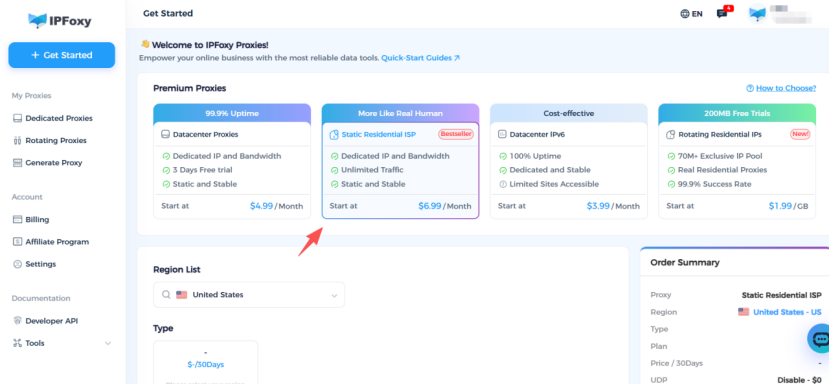
For example, global proxy provider IPFoxy specializes in clean IP resources. IPFoxy offers static ISP coverage across multiple global regions and provides out-of-the-box integration with anti-detect browsers and cloud phones, making it a solid foundation for global marketing teams.
- High IP Purity: Uses triple-database verification to achieve a 99.8% residential IP confirmation rate. Its “Pro” series native dual-ISP proxies offer a clean residential IP profile ideal for finance-grade applications.
- Low Risk Score: On risk analysis platforms like Scamalytics, IPFoxy IPs average a low risk score of 21 (out of 100), with many IPs scoring 0.
- Protocol and Integration Support: Fully supports HTTP(S) and SOCKS5 protocols while offering smooth integration with anti-detect browsers and cloud phones.
IV. Primary Use Cases for Static ISP Proxies
1. E-Commerce Multi-Account Management
Operating stores on platforms like Amazon, eBay, Shopify, or Etsy involves strict account-linking checks. Registering multiple accounts under a single IP can trigger bans.
ISP proxies provide a dedicated, static IP for each store, keeping accounts isolated within authentic local network environments. These clean static IPs are essential for managing multi-store networks and high-risk setups. Connecting these proxies to anti-detect browsers or cloud phones helps maintain long-term account stability.
2. Social Media Account Matrix Management
Managing multiple accounts on Facebook, Instagram, X (Twitter), or TikTok via datacenter IPs or frequently changing IPs triggers security flags. Using static residential IPs simulates a single user logging in from a consistent location, helping maintain account authority, boost engagement, and secure marketing operations.
3. Localized Ad Campaigns
Running ads targeted at specific cities or regions requires precise IP positioning. Quality ISP proxies offer city-level targeting to match your intended market. Keeping your ad account login IP aligned with the target location improves ad relevance, raises quality scores, and protects ad accounts on Google Ads, Facebook Ads, and TikTok Ads from risk triggers.
4. Gaming and Multi-Instance Operations
Running multiple game instances on a single machine requires clean, fixed residential IPs to simulate separate local players. Static residential proxies offer the stable connectivity needed to prevent disconnects or suspicious activity flags.
5. Secure Payment Management
Payment and financial platforms (such as PayPal, Stripe, Wise, and Payoneer) strictly monitor login IPs. Frequent location changes can lock accounts or trigger security reviews.
The same applies to crypto exchanges like Binance or Coinbase. Logging in through a static ISP proxy reassures risk systems by presenting a consistent home connection, significantly lowering fraud risk—especially when maintaining the same IP for over 30 days.
V. Conclusion
ISP proxies (static residential proxies) stand out by combining real residential authority with datacenter performance. Their primary value lies in offering a fixed, trustworthy, and stable network identity for online operations.
For cross-border e-commerce, social media management, ad deployment, and payment security, static ISP proxies serve as a dependable network foundation—helping businesses avoid risk triggers caused by changing IPs and supporting long-term growth.